Send-from name conventions: first name, full name, or team?
Send-from name conventions can lift replies by increasing trust and recognition. Learn when to use first name, full name, or a team name for continuity.
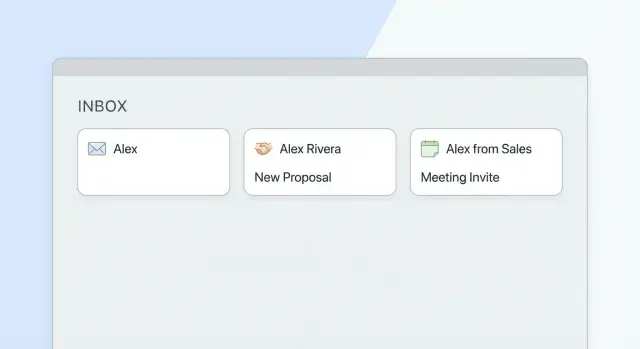
What this choice really affects in your inbox
Most people aren’t trying to pick the “perfect” name. They’re trying to pick something that gets replies without feeling fake, awkward, or overly salesy. Your send-from name is the first thing a prospect reads, often before the subject line, and always before they decide whether to open, ignore, or delete.
That’s why the From name matters more than a lot of small copy tweaks. Your message can be well written, but if the sender name feels off, it creates friction before your first sentence even has a chance.
When someone scans their inbox, two signals land fast: trust and continuity. Trust is the gut-check: “Is this a real person? Do I want to hear from them?” Continuity is what happens next: “If I reply, who will answer me? If I see a follow-up tomorrow, will it look like the same conversation?”
Your From name quietly influences open behavior, reply comfort, thread recognition, and whether someone feels safe forwarding the email to a colleague.
A simple example: imagine a prospect gets an email from “Sales Team” on Monday, then a follow-up from “Jake” on Wednesday. Even if the text is good, it can feel like two different senders (or worse, automation). The opposite is also true: if it’s “Jake Miller” both times, the thread feels continuous and lower risk to engage.
The goal isn’t to constantly optimize this detail. Pick one approach that matches your audience and your setup, then stick to it across mailboxes and sequences.
Two goals: trust and continuity
Your From name has two jobs. First, it needs to earn a quick moment of trust in a crowded inbox. Second, it needs to stay recognizable across follow-ups, so your thread doesn’t feel like a new cold email every time.
Trust is simple: does this look like a real person you could reply to, or a faceless blast? Many people decide in a second based on the From name plus subject line. If the name feels generic, overly “brand-y,” or inconsistent with the email signature, some readers assume it’s automated and ignore it.
Continuity is what keeps momentum. Cold email is rarely one-and-done. If your first message is from “Jordan,” the second is from “Sales Team,” and the third is from “Jordan P.,” you’re asking the reader to re-figure out who you are each time. Even if your copy is good, that extra friction lowers replies.
A practical way to think about this is: are you asking for a reply to a person, or to a team? A person-to-person ask (“Could I get your thoughts?”) fits a personal sender identity. A support-style workflow (“Reply to book a time”) can work with a team identity, but only if it stays consistent and feels accountable.
The last piece is internal reality. Can you actually keep the same sender over time? If SDRs rotate accounts, go on leave, or share an inbox, continuity can break unless you choose a convention you can maintain.
A quick way to decide is to answer these questions:
- Will the prospect expect a human conversation, or a handoff to a group?
- Can you keep the same sender name for 30 to 60 days of follow-ups?
- Will the From name match your signature and how replies are handled?
- If someone forwards the email internally, will it still look credible?
Example: if Priya sends the first email but follow-ups might be handled by whoever is available, pick a convention you can maintain. Either keep “Priya [Last]” through the thread, or use a consistent team identity from the start.
First name only: when it works and when it backfires
Using just a first name in the From field can boost replies because it feels like a real person reaching out, not a campaign. But it only works when the rest of your message supports that feeling.
First-name only tends to fit best when the relationship you’re trying to start is naturally personal. Think founder-led outreach, small teams, or local services where people expect a human to show up.
It’s a good fit when you’re clearly the face of the offer (founder, consultant, specialist), the email reads like a 1:1 note rather than a template, and you can follow up from the same identity for weeks.
It goes wrong when the first name creates ambiguity. If your prospect thinks, “Who is this?” you’ve already lost attention. In high-spam niches (marketing tools, crypto, “agency growth”), a generic first name can look like it was picked from a template.
First-name only can also backfire when the name is very common (Alex, John, Maria), the email address doesn’t match the sender identity, the signature is thin or missing a company and role, or multiple teammates send from the same first name and create confusion.
A simple rule: if they might wonder who you are, add one more detail somewhere else. You don’t have to switch to a full name in the From field, but you should remove ambiguity.
For example, “Maya” can work if the email address is [email protected], the signature says “Maya Chen | Lead Partnerships, BrightOps,” and the opening line includes a specific reason you picked them.
Full name: the safe default for many B2B campaigns
If you’re unsure, a full name is usually the safest choice for B2B. It signals there’s a real person behind the email, and it matches what buyers expect when money, contracts, or risk are involved.
Full names tend to work best when credibility matters more than vibe. Think enterprise buying, finance, healthcare, legal, security, or any industry where people are trained to be cautious. In those cases, “Alex” can feel vague, while “Alex Chen” feels easier to trust and verify.
A full name also helps later, when your prospect is busy and your message becomes one of many threads. People search their inbox by a name they half remember. If your From name is consistent, it’s easier to find the earlier conversation and pick it back up.
That said, full names can feel too formal in some audiences. If you sell to creators, local SMB owners, or casual communities, “Jordan Smith” can read like a sales rep in a hurry, especially if the email copy is also polished and corporate. In those cases, a first name can feel more natural, but the email still needs to be clearly human and specific.
Where full names really save you is continuity. If multiple reps rotate on an account, changing the From name mid-thread often lowers replies because it makes the conversation feel handed off or automated. A better approach is to keep the same From name in a thread, even if someone else is helping behind the scenes. If you must rotate, do it at a natural point and explain it in one sentence.
A simple rule set:
- Use a full name for high-stakes B2B, longer sales cycles, or cautious industries.
- Keep the From name identical across follow-ups.
- Avoid switching reps mid-thread unless you clearly introduce the handoff.
- Make sure the signature and reply address match the same identity.
Team names: useful for continuity, risky for warmth
Team-based From names can make outreach feel consistent, especially when more than one person might reply. But they can also look like marketing, which can lower replies when your message reads like a 1-to-1 note.
Common formats that still keep a human anchor include:
- "Alex at BrightPath"
- "Alex from Partnerships"
- "BrightPath Partnerships"
- "BrightPath Team"
A team name helps most when the recipient expects continuity, not a single relationship. Think shared inbox behavior (someone else may pick up the thread), handoffs between SDR and AE, or follow-ups that feel closer to support than sales.
The risk is warmth. “BrightPath Team” can read like a newsletter, even if the email is personal. If you open with a specific line about their role or recent work and then the sender looks like a department mailbox, the brain flags it as automated. That mismatch is where replies drop.
To keep it human, make sure the email still has a real person behind it and a clear reply path. One practical guideline: use a team label for continuity, then add personal cues (name, role, and a human sign-off) for trust.
If multiple people may reply, it’s often enough to set expectations once: “If I miss you, someone from my team will follow up.”
How to pick your From name in 5 steps
Choosing a From name is less about style and more about the relationship you want a stranger to assume. A good convention makes the email feel expected, believable, and consistent across follow-ups.
-
Decide what role you want to sound like. Peer (“quick question”), advisor (“saw something you might like”), vendor (clear offer), or partner (shared goal). The more you ask for, the more you need trust.
-
Pick who owns the conversation. If replies should go to one person who can follow up fast, use that person as the sender. If the account will be handled by whoever is on inbox duty, plan for continuity from day one.
-
Choose a format and keep it for the whole sequence. Switching from “Maya” to “Maya Chen” to “Maya from Acme” mid-sequence can look like a handoff or automation.
-
Make the rest of the email match the sender. Your subject, first line, and signature should agree with the identity you chose. A warm first-name sender with a stiff corporate signature feels off. A team sender with “Sent from my iPhone” looks odd.
-
Test one thing at a time on a small batch. Run a small A/B test where only the From name changes, not the copy, audience, or offer. Look at reply quality, not just opens.
Here’s a quick example: a two-person SDR team rotates inbox coverage. If they send as “Jordan” but replies get answered by different people, prospects may feel bait-and-switch. Using a consistent sender (“Jordan Lee”) with a signature line like “SDR team” often keeps the human feel while setting expectations.
Common mistakes that hurt replies
Most reply drops aren’t because your offer is bad. They happen because the From name feels inconsistent, impersonal, or slightly off. People use tiny trust signals to decide whether to answer or ignore.
One big mistake is changing the From name mid-sequence. If step 1 is from “Mia” and step 3 is from “Mia P.” or “Mia | Growth,” it looks like a different sender took over. Even if the email address stays the same, the thread feels less human and people stop replying.
Another common issue is a mismatch between the header and the signature. A friendly nickname up top (“Sam”) and a different legal name below (“Samuel Johnson”) can trigger a quick doubt: “Who is this, exactly?” The same goes for adding a middle initial sometimes and not others.
Other patterns that quietly reduce trust:
- Asking for a meeting while sending from a “Sales”-style identity (or anything that feels like “no-reply”). It signals “mass blast,” even if your message is personal.
- A From name that doesn’t match the email address at all (for example, “Alex” sending from [email protected]). Many readers read that as spoofing.
- Changing too many things at once. If you change the From name, subject line, and first sentence in the same week, you won’t know what caused the result.
A realistic example: you send step 1 as “Jordan” from [email protected], then your teammate takes over and step 2 goes out as “Acme Team” from the same address, and the signature says “Jordan Lee.” That combination reads like three different identities. Replies often fall off right there.
Realistic examples for different sending setups
Small details like your From name change how a thread feels after the first reply. Below are three common setups and what the prospect experiences in their inbox.
Scenario A: Solo consultant emailing founders
A founder is deciding if you’re a real person with a clear point of view. For solo work, a human name usually beats anything that sounds like a brand.
Example: use first name + company in the signature (or full name if your first name is very common).
Subject: Quick question about {Company}
From: Alex

Re: Quick question about {Company}
From: Alex

Re: Quick question about {Company}
From: Alex
Why it fits: the thread stays personal. When the founder searches their inbox later, it still looks like one conversation with one person, not a campaign.
Scenario B: SDR team booking meetings for an AE (handoff matters)
Here, continuity is the goal. The prospect shouldn’t feel like they’re being passed around without context.
A practical pattern: SDR uses full name, then the AE joins later with their own full name, and the SDR clearly introduces the handoff in the same thread.
Subject: Can we compare notes on {topic}?
From: Maya Chen

Re: Can we compare notes on {topic}?
From: Maya Chen

Re: Can we compare notes on {topic}?
From: Daniel Rivera
What makes this work is the moment of transition. If Daniel appears out of nowhere, trust drops. If Maya says, “Looping in Daniel, who will run the call,” it feels normal.
Scenario C: Agency outreach with multiple specialists
Agencies often want to look established, but “Team” names can feel cold. A good compromise is to start with a real person and use a team identity only where it helps (like shared replies or scheduling).
Example: start from an individual, keep follow-ups from the same name, and only bring in another specialist when needed.
Subject: Idea for improving {result}
From: Priya Shah

Re: Idea for improving {result}
From: Priya Shah

Re: Idea for improving {result}
From: Priya Shah

Re: Idea for improving {result}
From: Jordan Lee
If your agency truly works from a shared inbox, test a team label only after the first positive reply. Cold starts like “Growth Team” often get ignored because the recipient can’t picture who they’re talking to.
Quick checklist before you send
Before you hit send, do a 30-second scan of your From name, subject line, and first line. Most people decide whether to open based on what they see in a tiny inbox preview, so small mismatches can quietly cut replies.
Use this quick check:
- Does the From name match the signature exactly?
- Can the same sender stay consistent for the whole sequence?
- Would a stranger understand who you are in 2 seconds?
- Does it look normal on a phone preview when truncated?
- If you use a team name, is a real person still clearly attached in the body?
One simple test: forward your draft to a friend and ask, “Who is this, and why are they emailing me?” If they can’t answer instantly, adjust the From name and opening line.
Next steps: standardize, test, and keep sender identity consistent
Pick one default From name per audience, then write it down as a simple rule. The goal is that anyone on your team can send a new sequence next month and it still feels like the same person (or the same team) showing up in the inbox.
A practical way to do this is to create a one-line standard for each segment, like: “Mid-market ops: Full Name” and “Founder-led SMB: First Name + company in signature.” This avoids constant debating and keeps outreach consistent.
Next, run a small test instead of guessing. Keep everything else the same (offer, targeting, subject, body). Only change the From name format so you learn what actually changes replies.
Run one A/B test for a week or two (first name only vs full name, full name vs “Name from Company,” or full name vs a team name if you truly need continuity). Track results by variant and by step in the sequence, not just overall numbers.
Finally, keep sender identity stable while you test. The biggest hidden mistake is changing too many identity signals at once: new domain, new mailbox, no warm-up, and a new From name. Even if your copy is good, that hurts trust, can hurt deliverability, and muddies your test.
Operationally, keep domains, mailboxes, warm-up, and sequences consistent while you test identity. If you run outbound in LeadTrain (leadtrain.app), it’s easier to keep sender identities stable across multi-step sequences because domains, mailboxes, warm-up, and reply handling live in one place.
Once you find a winner, lock it in, document it, and only retest when your audience or offer changes. "}
FAQ
What’s the best default send-from name for cold email?
Default to full name for most B2B outreach because it’s easy to trust and easy to recognize later in a busy inbox. Use first name only when your email truly reads like a 1:1 note and you can keep the same identity across follow-ups. Use a team-style name only when multiple people will reliably handle replies and you can keep it consistent.
Why does the From name change reply rates so much?
Your From name is often seen before the subject line, so it affects the quick “trust check” and whether the thread feels like one continuous conversation. If it looks generic, inconsistent, or overly “departmental,” people hesitate to open and even more hesitate to reply.
When does using only a first name work well?
First-name only works when the rest of the email supports a personal, human conversation and the reader won’t wonder who you are. It can backfire when the name is very common, your signature is thin, or your niche is spammy, because it starts to look like a template identity.
When should I use a full name instead of a first name?
Use a full name when credibility matters more than casual vibe, especially in cautious industries or higher-stakes buying. It also helps with inbox search and recognition weeks later, which makes follow-ups feel like the same thread instead of a new cold email.
Is it bad to change the From name during a sequence?
Switching sender identity mid-sequence usually creates friction because it feels like a handoff or automation, even if the email address stays the same. If you must switch, do it at a natural point and explain it in one sentence so the reader understands why a new person is appearing.
Should we use a team name like “Sales Team” or “Company Team”?
Team names can help continuity when multiple people might reply, but they often feel colder and more “marketing-like.” If you use a team label, keep a clear human owner in the body and signature so the recipient knows who they’re actually talking to.
Does it matter if the From name doesn’t match the signature?
It can, because the mismatch triggers doubt: the reader wonders who you really are. Keep the identity aligned across the From name, email address, and signature so the thread feels consistent and safe to reply to.
How should an SDR team handle From names if an AE will join later?
A simple pattern is: keep the same sender name for the entire thread, and if an AE takes over, introduce the handoff in the same thread. The transition should feel explained and intentional, not like a random new sender showing up.
How do I A/B test From names without messing up results?
Test only the From name while keeping the audience, offer, subject, and body the same, and run it on a small batch first. Judge results by reply quality and by step in the sequence, not just opens, because opens can move for reasons unrelated to trust.
What operational steps help keep sender identity consistent?
Warm up mailboxes, avoid changing domains at the same time as your identity, and keep the sender name identical across follow-ups. If you use a platform like LeadTrain, keeping domains, mailboxes, warm-up, sequences, and reply handling in one place makes it easier to maintain a stable sender identity while you test.