Qualification questions for sales emails that filter politely
Use qualification questions for sales emails to spot fit fast without sounding pushy. Copy-ready prompts, examples, and a quick checklist for outreach.
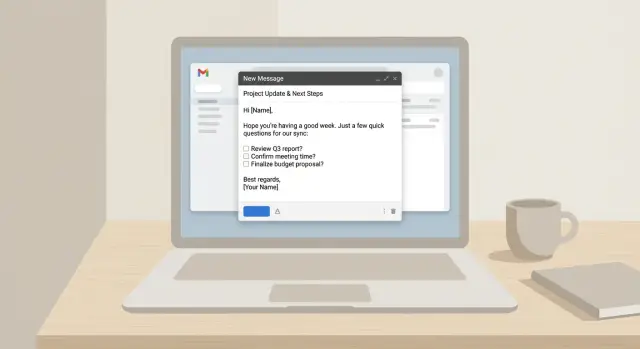
Why qualification questions matter in email
Tire-kickers rarely say, “I’m just browsing.” Instead, they send vague replies like “Sounds interesting,” “Can you send more info?” or “What does it cost?” with no context. You answer, they ask another broad question, and what looked like a simple lead turns into a long thread that still doesn’t end in a call.
That back-and-forth usually happens because the email never establishes whether the person is a fit. When you skip qualification, you end up doing discovery in slow motion, one message at a time. It feels polite, but it quietly drains your week.
A good qualification question fixes this without making your message pushy. Done right, it gives the reader an easy next step: share one detail that moves things forward, or opt out without friction. The goal isn’t to “trap” anyone. It’s to respect both calendars.
You can qualify a lot in 1-2 lines if the question is simple to answer. Most of the time you’re just confirming one of these basics: who owns the problem, timing (now vs later), scale (rough volume, team size, number of accounts), current setup, or one clear constraint (like a budget range or a minimum requirement). That’s it. No heavy forms, no interrogation.
A small example: you email a Head of Sales offering help with outbound. They reply, “Interested, tell me more.” If your next message is two paragraphs of features, you’ll often get another vague response. If you reply with one friendly question like, “Quick one so I don’t waste your time: are you looking to add pipeline this quarter, or is this more of a later project?” you either get a real timeline or a clear no.
When replies do come in, sorting them matters. LeadTrain can auto-classify responses (interested, not interested, out-of-office, bounce, unsubscribe) so real opportunities get handled first and vague threads don’t take over your inbox.
Rules for questions that sound polite
Good qualification questions feel like you’re helping the other person decide, not trying to corner them. Tone matters as much as wording.
Make every question optional. Open with something like “If it’s helpful” or “Only if you’re comfortable sharing.” That small signal reduces the pressure that makes people ignore cold emails.
Ask for ranges instead of exact numbers. People hesitate to share precise budgets, headcount, or conversion rates with a stranger. Ranges feel safer and still tell you what you need.
Give an easy “no” path. A polite exit keeps goodwill high and saves you from chasing the wrong leads.
Use plain words. Avoid phrases that sound like a script (“hop on a quick call,” “circle back,” “book time”). Write like you would to a colleague you respect.
Keep it to 1-3 questions max. One strong question beats three mediocre ones. If you need more detail, earn it in the follow-up after they answer.
A few language tweaks that soften the feel:
- Start with permission: “Quick check:” or “Mind if I ask one thing?”
- Offer choices: “Is this more of a this-quarter or later project?”
- Use ranges: “Roughly 5-10 seats, or more like 20+?”
- Provide an out: “If not a fit, no worries, just say ‘pass.’”
Example: if you sell a tool for SDR teams, instead of “What’s your budget?” try “Are you thinking under $500/month, $500-$2k, or $2k+?” Then add: “If neither is close, feel free to reply ‘not right now’ and I’ll close the loop.” That combination filters tire-kickers while staying polite.
If this is part of a sequence, keep the first email to one qualifier. Put the second qualifier in the next step if they engage.
Where the questions fit in a short email
A qualifying question works best when it feels like a natural part of helping the reader decide. The easiest place to put it is right after your value line, when they already understand what you do and why it might matter.
The simplest structure: value, then one clean question
Keep the email short: a quick reason you’re reaching out, one specific outcome you help with, then the question.
If you ask too early, it sounds like a form. If you ask too late, they may stop reading before they reach the point.
These placements usually work:
- After the value line: “If it’s relevant, quick question:”
- After a tiny proof point: “We’ve helped teams like X do Y. Would this apply to you?”
- After a micro-personalization: “Noticed you’re hiring SDRs. Are they doing outbound today?”
One question vs two questions
One-question emails get more replies because the reader can answer fast. Use one question when you only need a single filter (fit, timing, ownership, or a rough budget).
Two questions can work if the email is very short and the second one is clearly optional. A common pattern is one qualifier plus one scheduling question.
Bullets help when the reader needs to pick an option instead of writing a full reply. Keep it to 3-4 choices so it feels easy, not like homework.
Example (two questions, still short):
“Are you currently sending cold email from your own domain? If yes, is your main goal more replies or better deliverability?”
When to move the questions to a follow-up
If your first email already has a personal note, a clear offer, and a direct next step, push qualification to the follow-up. It’s also the better choice when the question is sensitive (budget, contract length, internal process).
A practical approach: first email asks for a simple yes/no, the follow-up asks for one detail.
End with a next step that matches your question. For example: “If the answer is yes, reply ‘yes’ and I’ll send 2-3 options.”
Step by step: build a simple email qualifier
A good qualifier turns “sounds interesting” into a clear next step, without making the reader feel grilled.
First, define “good fit” in one sentence. Keep it specific enough that you’d actually say yes or no.
Example: “We help B2B SaaS teams with 3-10 SDRs book more demos from outbound without burning deliverability.”
Next, pick 2-3 deal-breakers that truly change whether you should talk. Timing, team size, tech constraints, region, and budget range are common. If you add more than three, it starts to feel like a form.
Then write a soft opener that explains why you’re asking. “To point you in the right direction, can I ask two quick questions?” reads as helpful instead of pushy.
After that, choose a reply format that’s easy on mobile. A/B or 1/2/3 gets faster responses than open-ended prompts.
Finally, decide what you’ll do with each answer before you send anything. A qualifier only works if you act on it consistently.
Here’s the simplest build:
- Write your one-sentence fit statement, then underline the part that must be true.
- Turn 2-3 deal-breakers into yes/no or small-range questions.
- Add a short “why I’m asking” line.
- End with a low-effort CTA (reply A/B, or send a couple of times).
- Map outcomes: book, nurture, or politely close the loop.
Example: if someone replies “No budget until next quarter,” offer a short checklist and ask permission to follow up in a specific month. Don’t keep pushing for a call today.
Question types that filter fast (without being rude)
The best qualifiers sound like normal conversation. You’re helping the person answer one question: “Is this worth talking about?”
A good rule is one question at a time, easy to answer in a single line.
Fast filters that still feel helpful
Use one type per email (or two max if the email is very short):
- Need (current setup): “What are you using today for X?”
- Timing (priority): “Is this something you want to change this quarter, or later in the year?”
- Authority (who owns it): “Are you the right person for this, or should I ask someone else?”
- Budget range: “Do you typically spend under $X/month or over $X/month for this?”
- Process: “If this looks useful, do you usually buy after a quick call, or is there a review step?”
After you ask, stop. One short question plus one short sentence about why you’re asking is enough.
The polite “deal-breakers” question
Constraints save time if you frame them as protection for the prospect:
“Any must-haves or deal-breakers I should know before I suggest a next step?”
Even if it disqualifies the deal, it’s useful. You’d rather learn early that they can’t change domains, need a strict legal review, or require specific opt-out rules.
Copy-ready qualification prompts (short and friendly)
These prompts are designed to be answered in one reply. They filter out “just curious” readers without making anyone feel trapped.
One-liners you can paste into a first email
Use one, not five:
- “Is this something you’re responsible for, or should I speak with someone else?”
- “Are you looking to solve this in the next 30-60 days, or later?”
- “Do you already have a tool for this, or are you starting from scratch?”
- “Roughly how many people would use this (1-5, 6-20, 20+)?”
- “What would make this a clear yes for you?”
When someone replies with interest, a follow-up can ask two questions max:
“Quick check so I don’t waste your time: (1) what’s your target outcome, and (2) what’s your current setup today?”
“To point you the right way: (1) are you the person who would approve this, and (2) what timing are you working with?”
Quick reply A/B prompts (reply 1 or 2)
These work when you want fast sorting with minimal effort:
- “Reply 1) interested this month, or 2) interested later.”
- “Reply 1) you already have a process, or 2) you need to build one.”
- “Reply 1) you want more volume, or 2) you want higher reply quality.”
- “Reply 1) you handle this, or 2) someone else owns it.”
If it’s not a fit, give them an easy exit: “If this isn’t relevant, just reply ‘not a fit’ and I’ll close the loop.”
Role-based prompts can also feel personal without being pushy. For a founder: “Are you focused more on growth right now, or keeping costs tight?” For ops: “Is the bigger problem time spent, or keeping the process consistent?” For a sales lead: “Is your main gap top-of-funnel volume, or follow-up and booking?”
Example: turning interest into a qualified next step
A common moment to qualify is when a prospect replies with curiosity but no clear intent: “Sounds interesting. How does it work?” They’re engaged, but you still don’t know if they’re a fit.
Here’s a first reply that stays friendly and asks only one thing.
Subject: Quick question

Thanks for the note - happy to share.

Before I send details, quick check: are you currently using any outbound (cold email) to book meetings, or is this something you’re considering starting?

If helpful, I can also share a 2-minute outline of what the setup looks like.
If they answer, tighten the next step with two qualifiers and an easy out.
Subject: Re: quick check

Got it - thanks.

Two quick questions so I don’t point you to the wrong thing:
1) Roughly how many emails per day are you aiming to send (per mailbox)?
2) Who will run it day to day - you, an SDR, or an agency?

If you’re not planning to run outbound in the next 30 days, no worries - tell me “later” and I’ll stop here.
Typical replies and what to do next:
- “We’re already sending 200/day and want more meetings.” Propose times and confirm one detail (ICP or region).
- “We’re not sending yet, just researching.” Send a short starter path and ask permission to check back in 2-3 weeks.
- “We send, but our deliverability is bad.” Ask one pinpoint question and suggest a quick diagnostic call.
- “We only need 5 leads a month.” Disqualify politely, suggest a lighter approach, and close the loop.
- “Not my area.” Ask who owns outbound and send a one-line summary they can forward.
Common mistakes and how to avoid them
The fastest way to lose a good lead is turning a short, helpful email into a form. Most people won’t answer five questions, even if they’re interested. A qualifier should feel like a small favor, not homework.
One common mistake is stacking questions: role, tools, team size, timing, budget. Pick one key filter and (at most) one optional detail. If they answer, ask the next question in the follow-up.
Another mistake is an interrogation tone. Short questions can still sound harsh if they read like screening. Add a bit of context so the question feels fair: you’re trying to route them correctly or suggest the right next step.
Fix the usual qualifier problems
- Too many questions: ask 1 clear qualifier, then offer two options (“A or B?”).
- Budget too early: start with fit and timing, then talk price after they confirm the problem.
- Vague wording: replace “significant volume” with a range they can pick.
- No exit path: give a polite way to say no.
- Ignoring “not the right person”: make forwarding easy and ask who owns it.
Vague qualifiers waste time on both sides. “Are you sending a lot of outbound?” is hard to answer. “Are you sending 0-20 cold emails/day, 20-100, or 100+?” is quick and concrete.
Don’t trap people if they’re not a match
A simple line keeps things friendly: “If this isn’t relevant, just reply ‘no’ and I’ll close the loop.” It sounds respectful and reduces ghosting.
Also plan for the classic reply: “Not me.” Ask who owns it, and give them a copy-paste forward they can send internally.
Quick checklist before you hit send
Do a 20-second scan before you send. The goal is to filter fast without making the reader feel tested.
- Keep it to 1-3 questions max.
- Make each question answerable in one short line (yes/no, A/B, or a single number).
- Add a graceful exit: “If it’s not a priority, just reply ‘not now’ and I’ll close the loop.”
- Make the next step obvious (reply A/B, or “this week vs next week”).
- Know what you’ll do with every possible answer. If an answer won’t change your next move, the question doesn’t belong.
A simple test: can someone reply in under 10 seconds on their phone? If not, shorten the question.
Next steps: test, measure, and keep replies organized
Treat your qualifier like a small experiment. Write 2-3 versions and rotate them so you can see what actually drives real conversations.
Keep the rest of the email the same and only swap the qualifying line. One version can ask about team size, another about current tool, and a third about timing. Track booked calls, not just replies. A prompt can increase reply rate and still attract tire-kickers.
If you’re running multi-step outreach, don’t cram screening into one email. Spread it across a short sequence: Email 1 asks the lightest fit question, Email 2 confirms one key detail, Email 3 offers an easy exit.
Reply triage is where teams waste time. You want simple categories that match action: interested, not interested, out-of-office, bounce, unsubscribe, and “later.” If you prefer to manage sending, warm-up, sequences, and reply sorting in one place, LeadTrain (leadtrain.app) combines those pieces so you’re not juggling multiple tools just to run and track outbound.
FAQ
What’s the main goal of adding a qualification question to a sales email?
Use one short question to confirm a single deal-breaker like timing, ownership, or current setup. It turns a vague “sounds interesting” into a reply you can act on, without starting a long discovery thread by email.
Where should the qualifying question go in a short cold email?
Place it right after your value line, when the reader already understands what you do. That spot feels natural and gets the question seen before they stop reading.
How many qualification questions should I ask in the first email?
Default to one strong question. Add a second only if it’s clearly optional and the email is still very short, otherwise it starts to feel like a form.
What are the best things to qualify in 1–2 lines?
Ask about one of these: timing, who owns the decision, current tool/process, rough scale, or one clear constraint. Pick the one that changes what you do next if they answer.
How do I make a qualifying question sound polite instead of pushy?
Use permission and make it easy to answer, like “Quick check so I don’t waste your time…” followed by an A/B choice. Add a simple exit like “If not a fit, just say ‘pass’ and I’ll close the loop.”
How can I ask about budget without scaring people off?
Ask for ranges or options instead of exact numbers, like “under $500/month, $500–$2k, or $2k+.” Ranges feel safer to share and still let you qualify quickly.
When should I move qualification to a follow-up instead of the first email?
Move sensitive questions to the follow-up after they confirm interest. A good pattern is first email = yes/no or A/B, then follow-up = one detail that helps you route them correctly.
What’s a simple A/B qualifying question I can copy-paste?
Use one question with clear options, like “Reply 1) this month or 2) later.” It reduces effort on mobile and gives you cleaner signals than open-ended prompts.
How do I handle replies like “Can you send more info?” or “What does it cost?”
Stop feeding the thread with long explanations and ask one clarifying question that forces a concrete answer, like timing or current setup. If they still stay vague, give an easy “not a fit” exit so you don’t spend more time than they will.
How do I keep reply triage from taking over my inbox?
Use action-based categories that match your next step, like interested, not interested, out-of-office, bounce, unsubscribe, and later. LeadTrain can auto-classify common reply types so your team handles real opportunities first instead of manually sorting every message.