Outbound for nonprofits and education: fit budget cycles
Outbound for nonprofits and education can work when you match budget cycles, use respectful language, and plan for procurement and approvals.
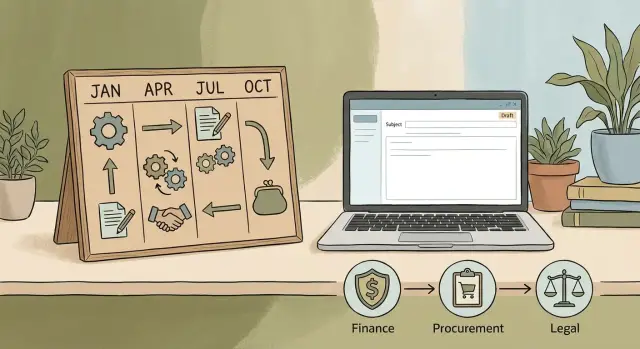
Why outbound feels different in nonprofits and education
Outbound often misses in nonprofits and education because the usual sales motion assumes the reader can decide quickly. In many schools and nonprofits, the person who feels the problem is rarely the person who can sign.
A “no” usually isn’t a rejection of the idea. It’s often one of these realities:
- The budget is already locked for this period.
- Approvals sit with finance, leadership, a board, or a department head.
- Grant rules limit what they can buy and when.
- They must follow a preferred vendor list or formal purchasing process.
That changes how people reply. Many buyers won’t write “yes” unless they know the next step is allowed. Even a friendly contact may stay vague because they don’t want to create procurement work or compliance risk.
Procurement shapes timing, too. Schools may need quotes for a purchase order. Nonprofits may need spending tied to a grant line item. Paperwork like W-9s, insurance certificates, security reviews, or specific contract terms can be required. When you ask for “a quick call this week,” you might be asking them to step outside the process.
A better approach is to help them take a safe next step. Instead of pushing for a demo right away, offer something they can share internally (a one-page summary), or ask who typically needs to be involved before any vendor call.
How budget cycles actually work
In nonprofits and education, most “yes” answers depend on timing as much as need. Money may exist, but it’s usually labeled for a specific purpose and can only be spent during certain windows.
Funding typically comes from grants (restricted and deadline-driven), annual allocations (district, city, state, board), donations (more flexible but less predictable), and sometimes student fees (common in higher education). Each bucket has different rules, which is why the same offer can be “possible” in May and “impossible” in October.
Most organizations still move through a familiar rhythm:
- Planning: teams gather needs, compare options, and draft requests.
- Approval: finance, leadership, or a board signs off.
- Freeze: budgets lock, audits happen, and spending slows.
- Spend-down: teams use remaining funds before they expire.
The dates vary. K-12 districts often align tightly to a public fiscal year and board meetings. Universities can have department budgets on different schedules plus grant-funded projects. Nonprofits may plan around grant award dates and fundraising seasons.
If you don’t want to ask about budget directly, you can still watch for signs of movement: hiring in program roles, public announcements of new initiatives, new cohorts or campuses, and RFP or partner announcements.
When you reach out, aim for a next step that fits their cycle. “Is this something you plan for next quarter or next fiscal year?” is often more useful than “Can we meet this week?”
Procurement constraints you need to respect
Nonprofits and schools often want to say yes, but they can’t skip process. If your outreach ignores procurement, it can sound like you don’t understand how they operate.
Most purchases involve multiple people. A program lead might champion you, but the budget owner approves spend, and procurement, legal, and IT/security may still need to sign off.
Common slow points include vendor onboarding paperwork (vendor forms, W-9, banking details), insurance requirements, security reviews, contract/legal review, and purchasing rules like minimum quotes, competitive bids, or preferred vendor lists.
One simple way to show respect is to separate “early questions” from “later paperwork.” Early on, ask about the buying path and the first constraint that could block you:
“If this ends up being a fit, would it need procurement onboarding, a security review, or competitive bids?”
Save detailed documents for when there’s real intent. Pushing for contract edits or sending a heavy security package in the first email can trigger a defensive response. Instead, offer a short set of basics when they’re ready (a brief data practices summary, standard contract language, insurance details).
A helpful closing line is approval-friendly:
“If this is worth exploring, who should be looped in early so we don’t waste your time later?”
Adapting your ask to a real buying process
In schools and nonprofits, the person who likes your idea is rarely the signer. Your ask has to match the path it must travel: program lead to director, to finance, to procurement, sometimes to IT and legal.
Start with mission and outcomes, not features. “Reduce staff time spent on manual follow-ups” or “Increase attendance for family engagement outreach” is easier to defend internally than a feature list.
Early on, the safest next step is usually a small, low-risk commitment that creates proof for the next approval round. A few asks that tend to fit well:
- A short pilot with one team or one site.
- A limited scope (one campus, one program, one department).
- A clear success metric and a plan for who needs to see results.
- A not-to-exceed amount finance can approve without a perfect quote.
Pricing is a common stall point, not because it’s too high, but because it’s hard to request without context. Where you can, offer a simple range they can copy into an internal request, then firm it up once scope is agreed.
Also make “how hard is this to buy?” easy to understand. Many teams need to predict paperwork and timing as much as cost. Share a clear onboarding timeline, what forms you can complete, basic data/security notes, and how payment typically works (PO/invoice vs card).
If an outreach coordinator says, “We have no budget until July,” don’t fight it. Offer a small pilot proposal that fits their constraints, a success metric, and a calendar date to revisit expansion.
Language that works (and what to avoid)
Your words should show you understand two things: budgets are planned early, and buying involves approvals. The goal isn’t to create urgency. The goal is to earn a clear next step.
Subject lines and openings work best when they’re specific and easy to verify. Mention one concrete detail (program type, student group, grant theme, district size, a public initiative) and one simple reason you reached out.
Subject lines and openings that sound human
A few patterns that tend to feel respectful:
- “Quick question about {program} timing”
- “Is {initiative} funded this cycle?”
- “Who owns {area} approvals?”
- “{Name}, is this on your radar for next term?”
Then keep the opener short:
“I saw you’re running {program}. We help with {outcome} without adding a big lift for staff. Not sure if this is planned this cycle, so I wanted to ask before I assume.”
Phrases that reduce pressure
Buyers in these environments appreciate a clear off-ramp. Give them control:
- “If this isn’t timely, I can circle back in {month}.”
- “Is this something you evaluate during budgeting, or only when a grant is awarded?”
- “If you already have a vendor or internal process, I’m happy to align.”
- “Would it be better to speak with procurement, IT, or program ops first?”
When you need timing, ask neutrally: “What does your decision window look like?” or “When do you usually lock vendors for the next term?” Save “Can you hop on a call this week?” for when they’ve already shown interest.
If someone replies “we have a process,” treat it as useful information:
“Thanks, that helps. What’s the first step and a realistic timeline? If you point me to the right owner or form, I’ll follow it.”
Timing your outreach around decision windows
Timing matters more than clever copy. Many teams can’t buy on the spot, even if they like what you do. Your job is to show up when they’re planning, then stay politely present while approvals move.
Most opportunities show up in two places: before planning and right after funding is confirmed. Outside those windows, avoid making a call the only next step. Ask for the right month to reconnect and who owns the budget.
A cadence that fits long cycles
Fast follow-ups can feel like pressure. A calmer rhythm usually fits better:
- Week 1: initial email and one short follow-up.
- Week 2: one helpful asset (a short summary, a template, a simple example).
- Week 4: a check-in that asks for timing.
- Next quarter: a reminder tied to planning.
- Next fiscal year: a clean re-intro that keeps context.
When someone says “not now,” treat it as a scheduling problem. Log the month they gave you, then check back then.
A step-by-step plan for long budget cycles
The first email is the start of a calendar, not a closing attempt. Aim for a small “yes” that fits procurement reality.
Start by picking a narrow segment (one role, one org type, one program). Then write a couple of mission-aligned angles that match how they justify spend: outcomes, staff efficiency, or compliance and risk.
Next, map the buying committee. You don’t need a perfect org chart. You just need to know who must be comfortable (program, finance, procurement, IT/security, executive sponsor) and have one simple question ready for each.
Run a short sequence with a soft call to action over 10 to 14 days. Good options include “Worth a 10-minute sanity check?” or “Should I send a one-page summary you can forward internally?”
Finally, capture timing cues and schedule future touches. “Not now” is data. Track the month, the trigger (new budget, grant awarded, board meeting), and who to re-approach.
Example scenario: turning “not now” into a next step
A mid-size nonprofit runs an after-school program and wants a tool to track attendance and outcomes for a grant report. They like the idea, but funding is tied to a grant cycle and purchases over a threshold must go through procurement.
A strong first email confirms the priority (better reporting, less manual work), asks when the reporting window matters, and offers a small pilot. No pressure for a contract.
Three questions that fit this situation:
- “Is this tied to a grant deliverable or general ops budget?”
- “When do you need reporting in place so it’s not a last-minute scramble?”
- “Would a 30-day pilot for one site be realistic, then decide?”
They reply: “This looks useful, but we need procurement. We can’t buy until the new grant budget is approved.”
A good response respects the rule and turns vague timing into a specific next step:
“Understood. What would make procurement easiest on your side: a W-9, vendor form, or a simple quote/SOW? And who runs the procurement step? If you tell me the month the budget is approved, I’ll circle back then. In the meantime, would a short demo for the program lead help so you have internal notes ready?”
Now you have a procurement contact, a month, and a concrete action.
Common mistakes that break trust
Trust is the currency here. One clumsy email can create extra work or risk for the person reading it.
A common misstep is pushing for a meeting when the buyer asked for something else first. If they request a one-pager, pricing range, security overview, or vendor form, treat that as the next step. In many organizations, documentation is how internal approval starts.
Another trust breaker is promising timelines you can’t control. “We can be live in two weeks” falls apart when IT needs a review, procurement needs quotes, or a PO takes a month. Be honest about what you can do now (pilot, scope, paperwork) and what depends on their process.
Follow-up pressure also backfires. Rapid nudges can make your contact feel watched or unsafe engaging, especially if their inbox is monitored.
Finally, don’t treat every non-reply the same. Out-of-office and bounces are signals, not indifference. Handle them cleanly so you don’t create awkward threads.
Quick checklist before you hit send
Before you email a nonprofit or school, do a quick respect check. The goal is to make it easy for them to say yes to a small next step, even if the full purchase has to wait.
- Timing: do you know their fiscal year and planning window? If not, write as if you’re early and ask.
- Ask: keep it low-friction (a short call, a small pilot, or a one-page summary).
- Process: add one line that signals you’ll follow their vendor steps.
- Circle-back: suggest a specific month or week to reconnect.
- Basics: be ready with who you are, what you do, a rough pricing range, implementation effort, data/security notes, and payment terms.
A practical habit: write a short vendor info blurb (5 to 6 lines) you can paste when asked, so you can respond quickly when someone says “Send details for procurement.”
Next steps: set up a respectful outbound system
Treat outreach like a service, not a chase. Build one sequence for in-cycle moments (when planning or funding is active) and one for out-of-cycle moments (when you’re simply getting on the calendar). In both, include an easy way to say no or redirect you to the right person.
It also helps to categorize replies so your follow-ups match reality: interested gets scheduling options, not now gets a calendar-based check-in, out-of-office pauses, and unsubscribe stops.
If you want fewer tools to manage while you do this, LeadTrain (leadtrain.app) bundles sending domains, mailboxes, warm-up, multi-step sequences, and reply classification in one place, which can make it easier to run long, respectful follow-ups without losing track of where each lead is in the approval chain.
FAQ
Why do my outbound emails to schools and nonprofits get polite but vague replies?
Assume the person replying isn’t the signer. Make your first ask something they can safely do without triggering procurement, like confirming timing, identifying who owns the budget, or requesting a one-page summary they can forward internally.
What should I do when someone says “no budget until July”?
Don’t push. Thank them, ask what event changes the answer (new fiscal year, grant award, board meeting), and request a specific month to circle back. If appropriate, offer a small pilot idea they can plan for when funds open.
How can I ask about budget cycles without sounding pushy?
Ask a simple, neutral question about their planning window: “Do you evaluate tools during budgeting, or only after funds are approved?” If they share dates, align your follow-up to that window instead of asking for a meeting immediately.
What’s the best way to bring up procurement early?
Focus on the buying path. A good default is: “If this ends up being a fit, would it require procurement onboarding, a security review, or multiple quotes?” That signals respect and helps you avoid suggesting next steps they can’t take yet.
Should I lead with features or mission/outcomes in these sectors?
Lead with outcomes they can defend internally, like saving staff time or improving reporting reliability. Keep features secondary until they confirm it’s even buyable this cycle.
What’s a low-risk “next step” that fits long approval chains?
Offer a limited scope with a clear success metric and a simple timeline, like one team or one site for 30 days. The goal is proof they can share upward, not a full rollout commitment.
How do I handle pricing when they need approvals to even talk?
Give a simple price range they can paste into an internal request, then confirm the exact number after scope is agreed. This reduces back-and-forth and helps them estimate whether it fits their approval threshold.
What paperwork should I be prepared for with nonprofits and schools?
Be ready to provide basics quickly, but don’t dump a heavy packet in the first email. When there’s real intent, share the minimum they need to start onboarding, such as vendor details, insurance info if required, and a short data/security overview.
How often should I follow up without annoying them?
Use a calmer cadence that matches long cycles: one follow-up soon after the first email, then a helpful resource, then a timing check-in, then a planned circle-back tied to their budgeting window. Each touch should have a clear off-ramp so it doesn’t feel like pressure.
How can I stay organized across long cycles and many “not now” replies?
Classify replies so your next action matches reality: interested gets scheduling options, not now gets a dated reminder, out-of-office pauses, bounces trigger list cleanup, and unsubscribes stop immediately. A platform like LeadTrain can help by keeping sequences, warm-up, and reply classification in one place so long cycles don’t slip through the cracks.