Outbound copy localization checklist for tone and intent
Use an outbound copy localization checklist to translate cold emails without losing intent, tone, or claims, with a review flow that prevents awkward phrasing.
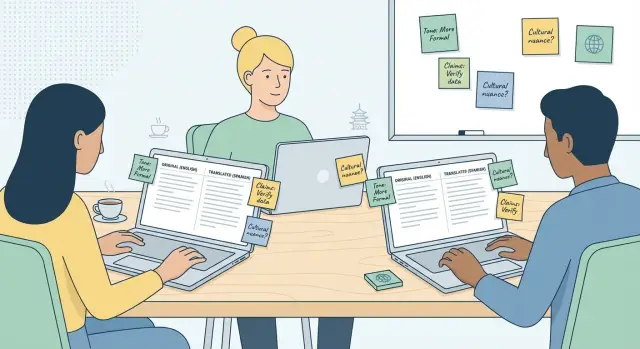
Why translated outbound emails often feel "off"
Most outbound emails don’t fail because of grammar. They fail because the words transfer, but the social rules don’t. A line that feels confident in one language can sound pushy, needy, or oddly formal in another. In cold outreach, small tone shifts can change reply rates.
The usual problems are tone, local norms, and idioms. English outreach often leans on friendly shortcuts like “quick question” or “Worth a chat?” Literal translations can read as vague or even suspicious. Humor, slang, and “cute” subject lines also travel badly. What feels light in one market can land as cringe in another, especially when the reader expects a straightforward, respectful style.
What matters most is intent: what the email is trying to make someone feel and do, not what it literally says. For outbound, intent usually has four parts:
- The goal (why you’re emailing)
- The ask (what you want them to do next)
- The risk (what could feel unsafe or annoying)
- The relationship (stranger-to-stranger, peer-to-peer, vendor-to-buyer)
If any of these shifts in translation, the email can feel wrong even when every sentence is “correct.”
A practical way to localize is to decide what must stay stable versus what can change.
Keep stable: the offer, the ask, the truth of the claim, and the level of pressure. Adapt: greeting style, formality, sentence length, examples, and the “reason to believe.” Replace idioms, wordplay, and culture-specific references. Then tune directness, since some markets prefer clearer asks and others prefer softer ones.
One simple example: an English opener like “Saw you’re hiring SDRs - congrats” can feel nosy in some cultures. The intent is relevance, not commentary on their business. A better local version might reference the change more neutrally, or move it to the second sentence.
Keep compliance and sensitive claims simple. If you’re unsure whether a promise, comparison, or personal-data reference is acceptable locally, remove it or soften it. Clear and modest beats big and risky.
Before you translate: lock the intent and constraints
Good translation starts before any words change. Skip this step and you often get a message that’s technically accurate but aimed at the wrong target. The translator needs to know what the email is trying to accomplish.
Start by naming the outcome in one sentence. Are you trying to get a reply, book a meeting, or quickly qualify (“are you the right person for this?”)? Each outcome changes how direct you should be, how much context you include, and how much friction you can afford.
Next, separate facts from style. Write down the must-keep facts that cannot drift: what you offer, who it’s for, any pricing or ranges, dates or deadlines, and proof (numbers, customer types, guarantees). Then decide what can change: small talk, humor, idioms, emojis, line breaks, punctuation.
Set constraints so the translator can make smart tradeoffs instead of guessing. Keep them simple: max length, reading level, brand voice, forbidden moves (no slang, no guilt, no pressure language), and required format (subject rules, CTA style, signature details).
Also define what “good” sounds like. Share 1 to 2 short examples of acceptable tone, plus one that’s not acceptable. A few lines beat a long description.
Tone and voice: make it sound natural, not literal
Tone is what people feel when they read your email. If the translation keeps the words but changes the vibe, replies drop fast.
Start with how you address the reader. Some languages expect a formal “you” by default in first contact. Others read formal address as cold or stiff. If you plan to switch from formal to informal later, do it with a clear trigger (for example, after a positive reply), not randomly between emails.
Then calibrate directness. A line that feels confident in English can feel rude elsewhere (“I need 15 minutes this week”). Often the fix isn’t making it longer, but adding a small softener: “Would you be open to…” or “If it’s relevant…” In other markets, too many hedges can sound unsure.
Politeness markers matter more than most teams expect. Greetings, closings, and small phrases like “thanks,” “sorry,” or “just” can change the mood. Keep them consistent across the sequence so the sender feels like the same person from start to finish.
Pacing also needs localization. Some languages read best with short, punchy lines. Others prefer fuller sentences because ultra-short lines can feel abrupt. Match the rhythm people see in everyday emails in that market, not the rhythm of your source text.
Be careful with humor. Jokes, sarcasm, and idioms are the fastest way to create awkward phrasing. Replace them with plain, friendly alternatives that keep the intent. For example, if the English line is “I don’t want to be a pest,” many languages read more naturally with something like “I’ll keep this brief” or “I’ll stop here if it’s not relevant.” Same meaning, better feel.
Cultural context checks that prevent cringe
A translation can be grammatically correct and still feel wrong. Review the email like a local would: what sounds normal, what sounds pushy, and what feels oddly foreign.
Swap references that do not travel
If your line depends on a shared reference, it often fails outside its home market. Holidays, sports, pop culture, and even small talk can land as confusing or cheesy.
Replace the reference with the real point you meant. If the intent is “timely,” use a neutral time cue (“this week”). If the intent is “friendly,” use a short opener that matches local norms.
Local credibility and contact norms
People judge credibility through details you might not notice. Titles, company roles, and how direct you are can signal “professional” in one market and “spammy” in another.
A quick set of checks:
- Formats: time zones, date order, number separators, currency symbols, units
- Titles: how seniority is shown (title-first, first name, role-first intros, or no title)
- Channels and cadence: whether cold email is common, and how often follow-ups are acceptable
- Politeness: direct requests vs softer phrasing, and how quickly you get to the ask
- Sensitivity: gendered language, family assumptions, stereotypes
Example: an English email says, “Can we grab 15 minutes next Tuesday at 2?” In many markets, that’s too specific too early. A better localized version keeps the intent (book a call) but changes the form: “Would a short call this week work? If yes, I can share a few time options in your time zone.”
Claims and promises: keep them accurate across languages
The fastest way to lose trust is to accidentally change what you’re claiming. A small wording shift can turn a soft benefit into a hard promise, or make a normal sales line sound like legal certainty.
Separate facts from persuasion. Facts are things you can prove (features, process, pricing, policies). Persuasion is how you frame those facts (benefits, social proof, urgency). Translate facts tightly, and let persuasion adapt so it feels natural without inventing new claims.
Proof needs special care. Metrics, logos, and testimonials can become misleading if the translator “improves” them. Keep numbers exactly the same, keep timeframes clear, and avoid turning a quote into a universal truth. If your English says “helped teams reply faster,” don’t let it become “doubles reply rates” unless you can prove it.
Some words are risky because they carry stronger meaning in other languages. If you use them, rewrite them into safer, precise alternatives.
High-risk words and safer rewrites
If you wouldn’t defend it on a call, don’t translate it as a promise.
- “Guarantee” -> “aim to,” “designed to,” “we typically see”
- “Best” -> “a top choice for,” “popular with,” “built for”
- “Free” -> “trial,” “no charge for X,” “included”
- “Instant” -> “in minutes,” “quick to set up” (only if true)
- “Never” -> “rarely,” “we work to avoid”
Also keep unsubscribe and preferences language clear and standard for that market, not clever.
Finally, keep certainty consistent across the whole sequence. Don’t let later steps quietly escalate into bigger promises. If step 1 says “we can help improve deliverability,” step 4 shouldn’t claim “we will put you in the primary inbox.”
Terminology and style: set rules once, reuse everywhere
Many awkward translations happen because every email gets treated like a one-off. A small shared style sheet keeps your voice consistent across subject lines, CTAs, and follow-ups.
Start with a glossary: product terms, feature names, and words you never translate. Product names like LeadTrain should stay the same in every locale. Do the same for key labels that appear in onboarding or reports.
Standardize your high-impact phrases: subject line patterns, the main CTA, and common follow-up openers. When those are consistent, the sequence feels intentional rather than stitched together.
Keep the style sheet short:
- Glossary (approved translations, do-not-translate terms, avoid terms)
- CTA library (3 to 5 approved CTAs per locale)
- Follow-up openers (approved versions of “bumping this” and similar lines)
- Formatting rules (date/time, quotation marks, capitalization, punctuation)
- Acronyms (keep, expand, or translate, and when to explain)
Pick one style per locale and stick to it. Decide on punctuation, casing, and whether emojis are allowed. If they are, define limits (for example: only in subject lines, max one).
Workflow: translate cleanly without losing intent
Clean translation isn’t a language exercise. It’s a meaning and behavior exercise: what should the reader feel, understand, and do next.
1) Lock the intent before anyone touches the words
Write a one-sentence intent statement (the outcome you want), then pick the one sentence that must land. Add constraints now: max subject length, max email length, and any required terms (product name, legal phrasing, pricing rules).
2) Translate for meaning, then rewrite for flow
Do an initial pass that prioritizes meaning over word order. Don’t fight to keep the same sentence structure. Once the meaning is in place, rewrite it like a native speaker would.
A practical way to keep control:
- Draft a meaning-first translation, even if it sounds stiff
- Rewrite it to match the target tone within the length limit
- Verify claims, numbers, dates, and proper nouns against the source
- Read it aloud and cut anything that makes you stumble
- Finalize subject line, preview text, and the exact CTA wording
After the rewrite, do a behavior check: is it still asking the same thing, at the same pressure level?
3) Review roles: intent, language, send context
Use a tight review loop: one person owns intent (sales or marketing), one person owns language (native editor), and one person checks send context (does it look right in an email client, and does the CTA still make sense?).
Common mistakes that create awkward phrasing
Awkward localized outbound copy is usually not a “bad translation” problem. It’s a mismatch between how people actually write in that language and the intent behind your message.
The fastest way to sound unnatural is translating idioms and phrasal verbs word-for-word. English lines like “quick win,” “circle back,” or “touch base” often land as confusing or childish when copied literally. If the phrase isn’t something a local salesperson would say, replace it with a plain version.
Over-formality is another common issue. Teams try to be “safe” and end up writing like legal text. The email becomes heavy and distant. If your goal is a short, human note, keep sentences short, verbs simple, and honorifics under control.
Tone can also flip the other way: too friendly too early. A casual opener, emojis, or strong familiarity might work in one market and feel fake in another. Do a quick relationship check: does this read like someone who has never met the recipient?
A few repeat offenders:
- Literal translations of idioms and phrasal verbs locals don’t use
- “False friends” (words that look similar but mean something else)
- Unnatural CTAs, especially direct translations of “Let me know” that sound passive
- Mixed pronouns or inconsistent formality within one email
- Copying English sentence order so the line feels backwards or robotic
Example: you translate “Let me know if you’re open to a quick chat” and it turns into a formal, indirect sentence that reads like customer support. The fix isn’t a fancier word. It’s using a CTA locals expect, like proposing two time options or asking a direct yes/no.
5-minute localization review before you send
Do a fast review right before you approve a translated sequence.
Read the first sentence out loud in the target language. If it sounds like a script, it probably is. You want a line a real person would actually write to a stranger.
Then check the intent. After one quick read, you should be able to say the ask in a single line. If you can’t, the translation likely buried the point under extra politeness.
A simple pass:
- Opener test: does it sound like a real email, not an ad?
- One-line ask: can the reader understand what you want instantly?
- Claims check: remove anything you can’t prove, or that reads inflated locally
- Say-it-out-loud test: cut phrases you would never say in conversation
- Mobile skim: keep sentences short, add line breaks, avoid huge paragraphs
Finally, scan the follow-ups as a set. The biggest “translated” moments happen when email 1 is friendly, email 2 becomes overly formal, and email 3 suddenly makes bigger promises than the first. Keep tone, facts, and urgency consistent.
If you manage multi-step outreach in LeadTrain, it helps to review the full sequence in one place and keep your intent notes attached to each step. That reduces drift when you create language variants and makes it easier to keep claims and CTAs consistent.
Example: localizing a cold email sequence without losing intent
A sales team has a 4-step SDR sequence that performs well in English (Day 1 intro, Day 3 follow-up, Day 7 proof, Day 12 break-up). They want to launch it in Germany without sounding like a translation.
They treat localization as a rewrite with guardrails, not a word swap. The goal stays the same: book a short meeting with the right buyer.
What typically changes:
- Greeting and formality: “Hi Maya” might become “Guten Tag Frau Schneider” and use the formal “Sie” until a reply signals otherwise.
- Directness: “Can you approve this?” often becomes “Who would be the right person to speak with about this?” to feel less pushy.
- CTA wording: “Worth a quick call?” can shift to “Open to a 10-minute call this week?” which is clearer and easier to answer.
- Timing and rhythm: follow-ups may be spaced wider and sent at times that fit local work habits.
What should not change: the core offer and proof points (what you do, for whom, and one concrete result), plus the meeting ask and the opt-out line.
A/B test without changing intent
Test one variable at a time, usually in Email 1. For example, compare a formal greeting vs a slightly warmer greeting while keeping the offer, proof point, sender name, and sending domain the same. Judge results by replies (and reply quality), not just opens, and stop early if negative replies or unsubscribes spike.
If your platform supports it, keep the same sequence structure and test language variants per step. Separating “interested” from “not interested” and “out-of-office” replies also helps you read results based on buyer intent rather than noise.
FAQ
Why do my translated cold emails sound weird even when the grammar is correct?
Because translation usually preserves words but not the social rules behind them. In cold outreach, tiny shifts in formality, directness, or “pressure” can make the same message feel pushy, vague, or fake even when it’s grammatically correct.
What should I decide before translating an outbound sequence?
Lock the intent first: the outcome you want, the exact ask, the facts that must not change, and what tone is acceptable. If you skip that, the translator will guess what matters and the email often drifts from the original purpose.
What parts of an outbound email should stay the same across languages?
Keep stable the offer, the ask, and any claims you need to defend (numbers, results, timeframes). Adapt greetings, formality, pacing, examples, and “reason to believe” so it reads like a normal email in the target market.
How do I choose between formal and informal “you” in another language?
Use one clear form of address for first contact and keep it consistent across the sequence. If you plan to switch from formal to informal, only do it after a clear trigger like a positive reply, not mid-sequence without a reason.
How can I make my CTA sound natural in another language?
Start with a direct ask that’s easy to answer, then add a small softener if needed (for example, “Would you be open to…”). Avoid stacking hedges, because too much softness can read as unsure or manipulative in some markets.
Should I keep humor, slang, or “cute” subject lines when localizing?
Don’t translate the joke; replace it with the intent behind it. If the intent is “friendly” or “brief,” use plain, neutral wording that locals actually write, and avoid idioms and wordplay that rely on shared culture.
How do I prevent a translation from turning a soft benefit into a hard promise?
Translate facts tightly and don’t let the wording become more absolute in the new language. If a phrase could be read as a guarantee, rewrite it into something accurate and modest so you can stand behind it on a call.
What local details make a cold email feel credible instead of spammy?
Use local conventions for dates, times, numbers, currencies, and units, and make time zones explicit when scheduling. Small formatting mismatches can make you look careless or spammy, even if the message is good.
How do I keep terminology consistent across translated emails?
A basic glossary and a small library of approved CTAs and follow-up openers per locale. Keep product names like LeadTrain unchanged, and standardize punctuation and casing so the sequence feels like one consistent sender.
What’s a fast final checklist to review a localized sequence before sending?
Do a quick read-aloud of the first sentence, restate the ask in one line, and check that claims and pressure level didn’t change. If you run sequences in LeadTrain, reviewing the whole sequence together helps catch tone drift between steps.