Not now reply workflow: re-engage politely at the right time
Use a Not now reply workflow to pause outreach, send a polite deferral, set timing rules, and re-engage on the right date without spamming.
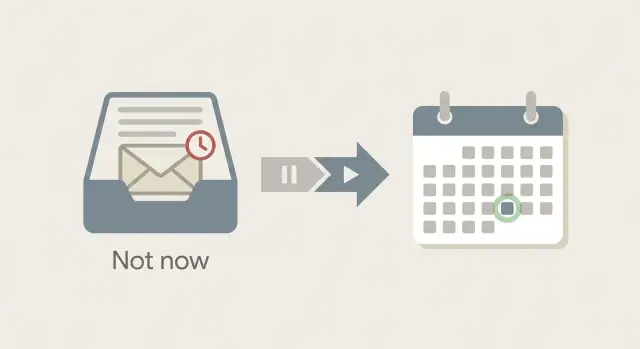
What a "Not now" reply really means
A "Not now" reply is usually a timing signal, not a verdict on your offer. They’re telling you: "I can’t deal with this today, but I might be open later if you handle it well."
Most of the time, it ties back to a real constraint: they’re busy (travel, deadlines, end of quarter), they’re waiting for a budget window (next month, next quarter, new fiscal year), or the internal priority isn’t there yet (a project got pushed, a teammate left, leadership changed direction).
The tricky part is that "Not now" can mean very different things. If you treat every reply the same, you either annoy a good lead or miss a real opportunity.
Quick signals to watch for:
- True deferral: they give a reason or a time hint ("circle back in April" or "after our hiring plan is set").
- Brush-off: short and vague ("not a priority" or "maybe later"), with no opening to schedule.
- Hard no in disguise: strong language ("stop reaching out" or "we’re all set") even if they don’t say "never."
- Wrong person: they respond but point you elsewhere ("talk to procurement" or "email my colleague").
- Compliance signal: they mention unsubscribing, privacy, or ask you not to contact them again.
Replying well matters for two reasons. First, it protects goodwill. People remember vendors who respect timing. Second, it protects future response rates and deliverability, because pushing someone who asked to wait often leads to spam complaints or negative replies.
A simple goal works best: acknowledge the timing, make it easy to choose a follow-up window, and stop active outreach until that date. If someone says, "Not now, we’re in planning," your best move is one calm question like: "When would it make sense to follow up?" Then honor the answer.
Decide whether this lead is worth re-engaging
A "not now" reply is not automatically a yes later. Before you schedule anything, do a quick check: is this person the right role, do they likely have the problem you solve, and is there a believable window when it could be revisited? If any of those are missing, re-engaging turns into polite spam.
Don’t capture hope. Capture facts. Pull out the concrete signals hidden in the reply.
Write down four things (even if some are blank):
- Timing: a month, quarter, or date they mentioned
- Trigger event: budget cycle, contract renewal, hiring plan, product launch
- Constraint: "no bandwidth," "budget frozen," "waiting on legal," "priorities changed"
- Stakeholder: "talk to my boss," "procurement," "our RevOps lead," "the team will decide"
Example: "Circle back in May after we finish migrating systems." That’s a clear trigger and month. It’s worth re-engaging if they’re your target persona and you can help with what comes after migration. If the reply is "maybe later" with no detail, treat it as low intent.
Ask one clarifying question only when it will change your next action, and only if it’s easy to answer in one line. For instance: "Got it - is May better, or early June?" or "When you say ‘after budget,’ is that end of Q2?" If they already gave a specific time (like "reach out in September"), accept it and stop probing.
Close the loop when the signals point to "no." Common cases: wrong person (they keep redirecting you), no need ("we don’t do this"), or repeated deferrals with zero specifics. In those cases, send a short thank-you and mark them as not a fit instead of keeping them in a future pile.
Timing rules that keep follow-ups respectful
Good timing is what turns a "Not now" into a real opportunity instead of an annoyance. The goal is straightforward: follow up when the buyer is likely to have headspace again, and stay quiet in the meantime.
It helps to pick a few default "snooze windows" your whole team uses. Fewer options means fewer mistakes and less guesswork.
- Light interest but no clear reason: 30 days
- "Check back in a couple weeks": 14 days (match what they said)
- "We’re swamped until next month": first workweek of next month
- Budget or planning is quarterly: first or second week of next quarter
- Contract renewals drive decisions: 60-90 days before renewal
Then adjust based on context. If they mention a budget cycle, hiring plan, or an upcoming vendor review, anchor your follow-up to that event, not to your own calendar. "After you hire a new SDR" is a better trigger than "in 21 days," because it respects their reality.
Time zone and workweek matter more than people think. If the lead is in the UK and you are in the US, a Monday 9am send for you can land late afternoon for them. Aim for their local morning on a Tuesday, Wednesday, or Thursday. Avoid weekends, and be careful with Monday mornings (inbox overload) and Friday afternoons (too easy to ignore).
When they don’t give a date, use a clear team policy so everyone behaves the same way:
- Ask for a month or specific week once
- If they still don’t choose, set 30 days and note "no date provided"
- Don’t send "just checking in" earlier than that
Example: A prospect replies, "Not now, we’re focused on hiring." You reply politely, set a follow-up for two weeks after their stated start date (or 30 days if none is given), and keep them paused until that day so they don’t get pulled back into active sequences.
Polite deferral script you can reuse
A good deferral reply does five things: it shows you listened, it reduces effort for them, it gets a time window, it asks permission to follow up, and it reminds them (quietly) why you reached out.
Here’s a simple script you can copy, with placeholders.
Subject: Re: [their subject]

Totally makes sense - thanks for the quick reply.

When would be a better time for me to check back: [specific month] or [specific month]?

If you prefer, just reply with a month or a date and I’ll reach out then. OK if I do?

(Reason I’m reaching out: we help [team type] with [one outcome] without [common headache].)

Thanks,
[Name]
Keep the "reason" line neutral. One sentence, no claims you can’t back up, and no extra links or attachments. The goal is to make the next touch feel expected, not pushy.
Quick variations for common replies
Use these as drop-in replacements for the timing question:
- "Next quarter works. Should I reach out in the first week of [Quarter] or closer to the end of the quarter?"
- "After you hire makes sense. Do you want me to check back a week after the role is filled, or once onboarding is done?"
- "After the holidays: is [first week back] better, or would you rather I wait until [mid-month]?"
- "If timing is unclear, no problem. Would it be annoying if I ping you again in about 60 days?"
If they already gave a month, don’t negotiate it. Confirm it and get permission:
Got it - I’ll circle back in [Month]. OK if I reach out then?
And if they sound stressed or slightly annoyed, shorten everything:
Understood. I’ll pause and check back in [Month]. Thanks.
The best deferral replies feel calm and final. You’re not trying to reopen the conversation today. You’re setting an agreed next step.
Step-by-step workflow: reply, defer, schedule, and pause
A "Not now" reply is a win if you treat it like a calendar decision, not a sales objection. The goal is simple: acknowledge the timing, agree on a date, and make sure they don’t keep getting automated emails in the meantime.
A simple 5-step flow you can follow every time
Reply in the same thread. Keep it short, confirm the follow-up date, and make it easy for them to correct you if needed.
- Reply and confirm timing: "Got it. I will reach back out on [date]. If a different month is better, just tell me."
- Set a clear status: mark the lead as Deferred (or Snoozed) and tag the reason (budget cycle, Q4 planning, busy, vendor review).
- Pause outreach immediately: remove them from any active multi-step sequence so they don’t get step 2 or step 3 while you wait.
- Schedule the re-entry: create a reminder for the exact date you agreed on, or schedule the lead to re-enter your follow-up queue that day.
- Save the comeback notes: write one or two lines you can reference later, like "asked to reconnect after hiring SDR" or "check back after website relaunch."
One small but important etiquette check
Some "Not now" replies carry a hint of annoyance: "Stop emailing me for a while" or "I am tired of these messages." When you see that, add one sentence that gives control back to them:
"No problem. If you would prefer I do not follow up at all, tell me and I will close this out."
That line protects goodwill and reduces the risk of spam complaints later.
How to keep the lead out of active sequences until the right date
A "Not now" reply only works if your system respects it. The quickest way to burn goodwill is to thank someone for the timing note, then keep emailing them because they’re still enrolled somewhere.
Start by giving the lead one clear status that every tool and teammate follows. If you keep parallel lists (one in a CRM, one in a spreadsheet, one in your email tool), someone will re-import the lead and restart outreach by accident.
Use a hard pause, not a soft reminder
Treat deferrals as a blocked state with a future follow-up date attached, not as "leave them in sequence but skip a step." A blocked state should prevent any outbound steps from sending until the right day.
A simple setup:
- Set status to "Deferred" (or "Not now") and store a single follow-up date.
- Apply an exclusion rule so deferred leads can’t be added to any active cold sequence.
- Record the reason (budget cycle, back next quarter, after hiring) in one field.
- Use one owner (rep) to avoid duplicate outreach from teammates.
- Only unblock on the follow-up date or if the lead replies again.
If the lead is in multiple campaigns, pick one "home sequence" to resume later (usually the most relevant offer) and keep everything else blocked. Otherwise, they can re-enter through a different campaign that doesn’t know about the deferral.
Nurture vs true pause: pick one
If you run ongoing nurture content, make it a separate track with a different promise (helpful updates, not "checking in"). If the person asked you to come back at a specific time, a true pause is safer. Mixing nurture emails into a deferral often feels like you ignored the request.
For team handoffs, make the pause visible and hard to override. Note the exact follow-up date, add a short internal note ("Do not re-sequence before date"), and keep the deferred status even if ownership changes.
What to send when the follow-up date arrives
When the follow-up date hits, your goal is to remind them of context and make it easy to say yes or no in one line. Keep it short, friendly, and specific.
Lead with the reason you’re emailing in the first sentence. Then reference the date you agreed on and their reason (without pressure). Avoid lines that sound like you’re keeping score.
Here’s a reusable first re-engagement email:
Subject: Quick check-in for <month>

Hi <Name> - you mentioned <reason> and asked me to reach back out around <date>.

Is it worth a quick 10-minute call next week, or should I send 2-3 bullets on how we help <their goal>?

Either way is totally fine.

Thanks,
<You>
Give them two simple next steps so they can answer fast: a quick call (10-15 minutes, with one or two time options), or a quick question (a short summary, or one clear qualifier).
If they don’t respond, send one gentle bump 2-4 business days later. Keep it even shorter than the first email and don’t add new info.
Hi <Name> - just bumping this in case it got buried.
Still make sense to revisit, or should I check back later?
After that bump, stop. Silence is an answer, and pushing past it can damage goodwill.
If they reply with another deferral ("Not this month"), treat it as normal. Thank them, confirm the new timing, ask for a specific date or event trigger (for example, "after your Q2 planning"), then pause again.
Common mistakes that burn goodwill (and deliverability)
A "Not now" reply is a gift: they answered, and they told you the timing. The fastest way to lose that goodwill is to treat it like a soft yes and keep pushing.
One pattern that hurts both trust and inbox placement is following up anyway. If someone says "circle back in Q2" and you email them next week, they learn that your promises aren’t real. Enough people react that way (annoyed replies, deletes, spam complaints), and your sender reputation takes the hit.
Another common mistake is sending vague "just checking in" nudges with no context or date. It forces the prospect to remember your last message, your offer, and why you’re back. A simple reminder line ("You asked me to reach out in mid-Feb") prevents that friction.
Common errors:
- You don’t pause the sequence, so automated steps keep firing after you agreed to wait.
- You set a personal reminder but don’t update lead status, so teammates keep emailing them.
- You re-engage too early because the month is slow and you want quick wins.
- You ignore subtle opt-out signals (one-word replies, irritation, repeated silence) and keep trying anyway.
- You reply with a new pitch instead of confirming timing.
The automation slip-up is the most damaging because it feels dishonest. Example: a prospect replies, "Not now, try in May." You answer politely, but you forget to pause the campaign. Two days later, they get your next automated step.
Finally, watch the difference between "not now" and "no." Some people avoid conflict and will never write "stop." If their replies get shorter or they sound annoyed, treat that as a stop signal and remove them from future sequences.
Quick checklist for handling "Not now" replies
Handling "Not now" well is less about what you say next and more about what you do behind the scenes. Run this checklist right after you read the reply.
The 5 checks to run every time
- Lock in a follow-up date. If they gave a date, use it. If they didn’t, pick a clear default (for example, 30 or 60 days) and note that it’s your best guess.
- Confirm permission when it’s unclear. If the reply is vague ("maybe later"), send one short line to ask what timing works, or whether you should close the loop.
- Remove them from active sends immediately. Make sure they’re paused out of any live sequences and excluded from A/B tests.
- Save context for Future You. Note why they said not now (budget, priorities, internal review), who else is involved, and any exact phrasing they used.
- Draft and schedule the next touch at a reasonable time. Schedule it for normal business hours in their time zone, and reference the date you agreed on.
A quick example
Someone replies: "Not now - check back next quarter." You set a follow-up date for the first week of that quarter, pause them from all sequences, and save a note: "revisit in Q2, team busy with product launch." When the date arrives, your message can simply say you’re following up as requested, with one relevant update.
Next steps: make re-engagement consistent across the team
A "Not now" reply is only useful if your whole team treats it the same way: reply fast, respect the date they gave you, and make sure they don’t get pulled into any active sequence until then.
A simple scenario: a prospect answers, "Circle back in April after budget review." If you handle this well, April isn’t a guessing game. It’s a clear next step.
How the workflow looks (day by day)
- Day 0 (today): Reply within a few hours, confirm the month, and ask one light question (for example, "Is early or late April better?").
- Day 0 (after replying): Pause any sequence for that lead immediately so no automated step goes out tomorrow.
- Day 1: Log the follow-up date and tag the reason (for example, "Budget review").
- 7 days before the date: Prep a short re-engagement draft so you’re not rushing later.
- On the follow-up date: Send one polite check-in, then wait.
After you pause and schedule, the rest is discipline. The biggest failures happen when someone replies politely but forgets to stop automation, or the follow-up date lives in one person’s notes.
Success isn’t "winning them back with six emails." It’s a clean outcome you can act on: a yes/no with a suggested time, a request for a quick call, a clear "no" (so you can stop), or a referral to the right owner.
If you want fewer slips, keep deferrals, follow-up dates, and sequence pauses in one place. Tools like LeadTrain (leadtrain.app) are built for this kind of outbound workflow, combining sequences with warm-up and reply classification so "not now" contacts don’t accidentally stay in active sends.
FAQ
Does “Not now” usually mean they’re interested or rejecting me?
It usually means they don’t have bandwidth or a decision window right now. Treat it as a timing signal, confirm when to follow up, and pause all outreach until that date.
How can I tell the difference between a real deferral and a brush-off?
If they mention a specific month, quarter, or event (like budgeting or a migration), it’s a true deferral. If it’s vague like “maybe later” with no details, assume low intent and ask one simple timing question once.
What’s the best first reply to a “Not now” email?
Reply calmly in the same thread, acknowledge the timing, and offer two easy options like “April or May?” End by asking permission to follow up on the chosen date and then stop messaging.
Should I ask follow-up questions or just accept the deferral?
Ask only one clarifying question, and only if it changes what you’ll do next. Keep it answerable in one line, such as “Is early June or late June better?”
How long should I wait before following up?
Use a simple default like 30 days for vague deferrals, and match any timeframe they gave you exactly. If they referenced a quarterly cycle or renewal, anchor your follow-up to that event rather than your own cadence.
Why is it important to pause sequences after a “Not now” reply?
Because the biggest risk is accidentally continuing automation after they asked you to wait. That creates frustration, can trigger spam complaints, and hurts deliverability over time.
What system should I use to keep deferred leads from getting emailed again?
Set a clear status like “Deferred” with one follow-up date, exclude deferred leads from active sequences, and assign a single owner. The goal is a hard block that prevents any outbound steps until the follow-up date arrives.
What should I send on the follow-up date?
Send a short message that references the agreed date and their reason, then offer two easy next steps like a quick 10-minute call or a few bullets by email. Keep it easy for them to say yes or no in one line.
How many follow-ups are okay after I re-engage?
Send one gentle bump 2–4 business days later, even shorter than the first follow-up, and then stop. Silence is a signal, and pushing past it usually burns goodwill.
When should I treat “Not now” as a ‘no’ and stop entirely?
If they ask you to stop, mention unsubscribing, or show clear annoyance, treat it as a stop. Also close it out after repeated deferrals with no specifics, because continuing becomes polite spam rather than a real opportunity.