NDA case studies for outbound agencies: build trust fast
Learn how NDA case studies for outbound agencies can build trust using process proof, anonymized outcomes, and honest constraints that prospects respect.
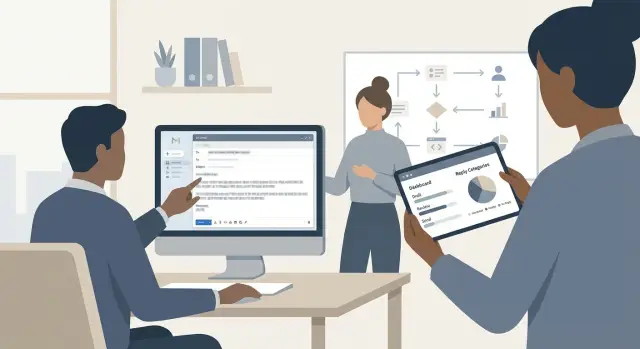
Why NDA case studies make outbound harder
When you can’t show client names, logos, or screenshots, prospects have less to grab onto. In outbound, trust starts thin. You’re a stranger asking for attention, time, or a meeting, and most agency claims sound identical on the surface. Without proof, people assume you’re guessing.
That’s what makes NDA-bound case studies tricky. The usual trust shortcuts are blocked. A recognizable logo and a clean before-and-after story do a lot of heavy lifting. Remove them, and your message has to stand on its own.
An NDA usually blocks identifiers, not learning. In practice, it often prevents sharing client names, brand assets, and recognizable details; exact numbers tied to revenue, spend, or internal KPIs; screenshots that reveal the company; and timing details that make the client easy to guess.
You can still share what a buyer actually needs, if you do it carefully: the problem you solved, the steps you took, the constraints you worked under, and the type of result (often as ranges or indexed change). This is where process proof helps. It shows you have a repeatable method, not a one-off win.
Trust breaks when a claim feels unearned. In cold email, vague proof reads like hiding. On a call, missing specifics turns every follow-up question into a trap: “Who was it for?” “What were the numbers?” “How do I know this will work for us?” If you can’t answer cleanly, the prospect protects themselves by ending the conversation.
The goal is simple: show real proof without violating confidentiality. That means leaning on anonymized results, process proof, and credible constraints so your outreach feels honest and believable even when you can’t name the client.
The three trust builders you can use under an NDA
Buyers still need proof, even if you can’t borrow trust from a recognizable logo. The fix is to replace “who” with “how” and “what changed.”
1) Process proof (show your method)
Process proof is the fastest way to sound real under an NDA. It answers three questions: what you did, how you did it, and how you knew it worked.
A clean structure is:
- Starting point (baseline: volume, reply rate, pipeline source)
- Steps (targeting, messaging, testing, deliverability, follow-up)
- What you tracked (meetings booked, qualified replies, show rate)
- Timeframe (first 2 weeks vs month 2)
- One concrete iteration after learning
This works because a buyer can picture you doing the same work in their account.
2) Anonymized results (numbers with context)
Numbers matter, but only when they come with guardrails. “We booked 40 meetings” is meaningless without context. “We booked 14 meetings in 30 days from 1,200 targeted contacts, selling a 15k-30k ACV service, after fixing deliverability in week 1” feels grounded even without a client name.
3) Credible constraints (say what you don’t do)
Credible constraints make you believable. Be clear about limits and fit: who you work best with, what you won’t promise (no guaranteed meeting counts), and what you refuse to do (spraying huge lists, ignoring compliance, faking personalization).
Then offer a safe first step: a small pilot, like a deliverability check plus one short sequence with a clear pass/fail metric. If the early signals are bad, you stop. That reduces fear without breaking the NDA.
What a good NDA-safe case study includes
A good NDA-safe case study is specific without naming names. It should let a buyer picture themselves in the story, then see exactly what you did, what changed, and how you know it changed.
Start by anchoring the “who” without leaving fingerprints. Name the niche, buyer role, and sales motion, but skip details that can be reverse-engineered (brand, city, rare product names). Example: “B2B SaaS, selling to VP Finance at 200-800 employee companies, outbound-led pipeline.”
Then write the before state and the goal in plain language. Avoid vague phrases like “improve performance.” Use a simple baseline and a simple target: “They were getting replies, but almost no qualified calls. The goal was 8-12 meetings per month from cold email without hurting domain health.”
Include the operating details buyers use to judge realism: scope (offers tested, ICP segments, contacts reached), timeline (setup, ramp, stable results), resources (who did what on agency vs client side, and which tools were involved), constraints (what you refused to do), and tracking (how outcomes were measured).
Finally, show what changed and how you verified it. Use ranges if needed, but keep them tight and explain the method. Example: “Across 3 inboxes over 6 weeks, positive replies averaged 2.1%-2.8%. Meetings booked were verified through calendar invites and CRM notes. Replies were categorized (interested, not interested, out-of-office, bounce, unsubscribe) so the numbers weren’t guesswork.”
If you can, add one small “receipt” of the process: a sequence map, an A/B test plan, or a before/after breakdown of reply categories. That’s proof buyers can trust even under an NDA.
How to anonymize results without sounding vague
The goal is for the reader to think, “I can picture this working for me,” without giving away who the client was. Good anonymization keeps the signal (what changed and why) and removes the fingerprint (details that point to one company).
Replace names with clear descriptors that still feel specific. A simple pattern: industry + size band + region band + channel.
For example: “B2B SaaS, 11-50 employees, North America, outbound email to IT managers.” That’s enough for relevance without exposing identity.
If exact numbers are sensitive, use ranges and keep them consistent across the story. “Reply rate moved from 0.8%-1.2% to 2.5%-3.1%” is more believable than “replies increased a lot,” and safer than a single precise figure.
A quick before vs after table helps:
| Metric | Before | After |
|---|---|---|
| Positive reply rate | 0.8%-1.2% | 2.5%-3.1% |
| Booked calls per week | 1-2 | 4-6 |
| Bounce rate | 3%-5% | 0.8%-1.5% |
Also remove unique details that identify the client. Red flags include a rare niche, a one-of-one product name, a very specific city, or a signature metric only that company tracks.
A helpful test: if a competitor could guess the client after reading it, it’s too specific. Keep the mechanics (targeting, offer, sequence changes, deliverability fixes) and blur the identifiers (who, exact timing, exact spend).
Step-by-step: build a reusable process-proof library
If you can’t name clients, your proof needs to show how you work. A process-proof library is a set of repeatable artifacts you can paste into emails, proposals, and calls. Often, it’s more convincing than a vague “we got results.”
Build it in four passes
Start small. Pick a few processes you want to be known for, document them once, then reuse them.
- Choose 2-3 repeatable plays (for example: “ICP to list building,” “deliverability setup,” “reply handling and routing”).
- For each play, write the inputs, steps, and outputs in plain language. Keep it specific enough to feel real, but not so detailed that someone can copy your whole service.
- Collect artifacts that prove the steps happened: a redacted SOP page, a sequence map, a warm-up graph, a reply classification view, or a QA checklist. Blur names, domains, and unique identifiers.
- Turn each play into a short proof block you can drop into outbound without rewriting it.
A simple “proof block” template
Keep each block to 5-8 lines so it fits in a cold email or follow-up:
- What you did (the play name)
- Constraints (industry, region, deal size band, or “new domain”)
- Inputs (what you started with)
- Outputs (what changed, measured in ranges)
- Artifact (what you can show on a call)
Example: “New sending domain, 3 mailboxes, offer test across 2 angles. After warm-up and inbox placement checks, we ran a 14-day sequence and used reply categories to separate ‘interested’ vs ‘not now’. Output: 18-26 positive replies from 900-1,200 sends. On the call, we can show the redacted sequence map and reply breakdown.”
If you use a platform like LeadTrain, it’s easier to pull these artifacts from one place (domains, warm-up, sequences, reply classification) and redact them once for repeat use.
Where process proof fits in your outbound messaging
Process proof works best when it shows you have a repeatable way of getting results, even if you can’t name the client. The goal isn’t to sound impressive. It’s to reduce risk in the buyer’s mind.
Place proof based on intent. If the prospect is cold and busy, lead with a small proof point. Save the deeper detail for when they reply or book a call.
The simple placement rule (early vs later)
A practical pattern:
- Email 1: one sentence of process proof (what you do, for who, and the outcome range)
- Email 2: one specific artifact (template, checklist, or step summary) and one credible constraint
- Email 3: a short anonymized mini-case (3 lines max) plus an invite to see the full breakdown on a call
- After a reply: ask permission to share redacted screenshots or exact numbers without the company name
Keep the proof in one short paragraph, no hype. Example:
“We run a 5-step outbound setup: domain + mailbox warm-up, targeting rules, 2-sequence test, reply tagging, then weekly iteration. In the last 90 days we’ve helped two B2B services teams add 8-15 qualified replies per week with a 1.5%-3.2% reply rate, depending on list quality.”
When to move proof into a call
If they ask “Can you share more?”, don’t dump a long story over email. Offer to walk through it live and ask permission:
“Happy to share a redacted version on a quick call. Are you okay if I show anonymized screenshots and exact numbers without the company name?”
If they ask “Who was the client?”, answer directly without getting defensive:
- “Under NDA, so I can’t name them, but it was a 30-60 person [industry] team selling [offer type].”
- “I can share the constraints: budget range, sales cycle, and channel mix. That usually helps more than the logo.”
- “If you need named references, I can ask for permission after we confirm we’re a fit.”
Tools can support process proof when they’re part of the system. For example, showing how you handle domains, warm-up, and reply classification makes your workflow feel consistent instead of improvised.
Use credible constraints to sound more believable
When you can’t name clients, one of the fastest ways to sound real is to be specific about what you won’t do. Credible constraints make your offer feel grounded, not inflated. They also help the wrong leads self-select out.
A simple opener works well: “Here is what we can share under the NDA.” Then give a few concrete details you can stand behind, plus one or two clear limits.
Constraints that build trust (not friction)
State the boundary as a practical requirement, not a warning. Keep it calm and factual.
Examples you can drop into an email:
- “Here is what we can share under the NDA: the workflow, the ramp-up plan, and the ranges we saw. We can’t share brand names or screenshots.”
- “We only take projects with a minimum 6-week test window. Anything shorter usually produces noisy results.”
- “We need access to your CRM stages so we can track reply quality, not just opens and replies.”
- “We start with a small daily send volume for the first 10-14 days to protect deliverability.”
- “We’re not a fit if you need 200 meetings next month. We focus on repeatable pipeline, not spikes.”
How constraints reduce objections
Many objections are misfit signals (wrong timeline, wrong expectations, missing access). If you state limits early, qualified leads feel safer and unqualified leads exit quickly.
Example: a B2B SaaS founder wants results in two weeks. Instead of debating, you say, “We can share anonymized examples, but we require a 6-week test and read-only access to pipeline stages.” They either accept the terms (less churn later) or decline (saving both sides time).
Common mistakes that ruin NDA-safe credibility
When you can’t name clients, trust is built on clarity. The fastest way to lose it is to sound like you’re hiding the whole story. NDA-safe stories work best when they feel specific, even if the brand is anonymous.
Mistake patterns buyers spot quickly
A common trap is over-anonymizing until nothing is left. “A B2B company in North America” could be anyone, so it proves nothing. Give enough anchors to picture the situation: category, deal size range, sales motion, and what was broken before.
Another credibility killer is sharing only outcomes and skipping the method. Results without a path read like luck. A short process snapshot (targeting, offer, list source, email structure, follow-up, reply handling) makes the win feel repeatable.
Mistakes that make an NDA-safe story feel fake:
- Numbers that look too perfect (like 20.00% reply rate) with no baseline or timeframe
- Hinting at the client name (“a unicorn in fintech”), which feels sneaky
- Copying competitor templates that sound like marketing, not work done
- Big claims with no constraints (no region, no segment, no ICP)
- “We did everything” stories that hide what you actually changed
A quick example of fixing vagueness
Weak: “We booked 42 meetings for a SaaS brand.”
Stronger: “For a 20k-60k ACV SaaS selling to finance teams in the UK, we rebuilt list filters, tightened first-line relevance, and added a 4-step sequence. Over 6 weeks, meetings went from 3 to 11 per month, with 18% of positive replies turning into scheduled calls.”
If you mention tools (including LeadTrain), keep it tied to the method, not as a trophy. The point is grounded proof, not brand-dropping.
Quick checklist before you send the first email
Before you hit send, read your email once like a stranger would. If they can’t understand what you do and what changed for a client in the first few lines, they won’t trust the rest.
Use this check:
- Can they understand the starting point in 10 seconds (who it was for, what was broken, what “good” looked like)?
- Do you include at least one metric with context (baseline + timeframe), not just a big number?
- Is your process described as steps someone can picture, not adjectives like “high-quality” or “tailored”?
- Do you state constraints clearly and politely (what you can’t share and what you can share instead)?
- Do you offer a safe next step that doesn’t feel like a trap (audit, small sample, short call with a clear agenda)?
A strong starting-point line is specific without exposing the client: “B2B service firm, 12-person team, outbound was inconsistent and replies were mostly ‘not now’.” Then add a reality anchor: “In 30 days, reply rate went from 1.2% to 3.8% after cleaning targeting and rewriting steps 1 and 2.”
Your process should read like actions, not vibes. “We pulled 200 leads, removed bad-fit titles, wrote 2 angles, ran A/B for 7 days, then kept the winner and added a timing-focused follow-up” is easier to trust than “we improved deliverability and messaging.”
For constraints, keep it short: “We’re under NDA, so we can’t share the client name or screenshots. We can share the steps, the timeline, and anonymized results.”
Then suggest a process-first next step: a 15-minute teardown of their current sequence, or a one-page plan for the first two email angles.
Example scenario: pitching with proof when you cannot name clients
A boutique outbound agency is pitching the Head of Marketing at a mid-market SaaS company. They can’t name clients, and their best results are locked behind NDAs. They still need to feel real.
They lead with one outcome, one repeatable process, and one believable constraint that explains what the result does (and doesn’t) prove.
Here is the opening email snippet they send:
Subject: Quick question about outbound for {Company}

Hi {Name} - we help B2B SaaS teams book demos using cold email.

Recent example (NDA): a workflow tool (50-120 employees) went from 0 to 18 qualified demos in 6 weeks.

What we did:
1) tightened ICP to 2 buyer roles
2) pulled a 1,200-lead list with 3 intent filters
3) ran a 4-step sequence with two angles + one breakup
4) weekly deliverability checks + reply tagging

Constraint: we only counted demos that showed up and matched the ICP. No paid retargeting, and we paused targeting enterprise accounts.

Worth sharing the exact setup we used to get replies without sounding spammy?

- {Sender}
On the follow-up call, they share proof in layers instead of dumping everything at once: the exact steps and timing, 2-3 anonymized screenshots (reply categories, calendar counts, inbox placement), ranges instead of single perfect numbers, and clear “won’t work for” conditions (tiny TAM, long sales cycles, compliance limits). They avoid logos, unique niches, exact company size, and any detail that makes the client easy to guess.
If the prospect asks for references under NDA, they offer options: a redacted written reference, an intro to a past client who has no NDA, or a call with a partner who can confirm the process and results in general terms.
Next steps: turn NDA-safe proof into a repeatable outbound system
Trust doesn’t come from one perfect case study. It comes from repeating a small set of proof patterns, then keeping what actually gets replies.
Create three proof blocks you can drop into any sequence:
- Process proof: 2-3 steps you follow (list rules, offer test, follow-up timing)
- Anonymized result: one measurable outcome with context (timeframe, channel, baseline)
- Credible constraint: one clear limitation (who it works for, what you don’t do)
Then run them like an experiment. Put one proof block in email 1, a different one in email 2, and rotate across campaigns. Track what changes responses, not what sounds impressive.
A simple tracking setup is enough if you’re consistent: tag replies by category (interested, not interested, out-of-office, bounce, unsubscribe), note which proof block the prospect saw most recently, and review weekly.
Keep a lightweight repository so your proof stays sharp. One doc is fine. Store the proof block text, the source (screenshot, internal notes), and the constraint that makes it believable. When you update results, keep old versions too so you don’t accidentally exaggerate over time.
If you want fewer moving parts, LeadTrain consolidates domains, mailboxes, warm-up, sequences, and AI-powered reply classification in one place, which makes it easier to capture and reuse NDA-safe artifacts. If you’re curious, the product lives at leadtrain.app (as plain text, not something you need to link in outreach).” }