Logistics outbound messaging for SLAs, delays, claims, visibility
Logistics outbound messaging that explains SLAs, delays, claims, and tracking visibility with clear examples, so prospects trust your process from day one.
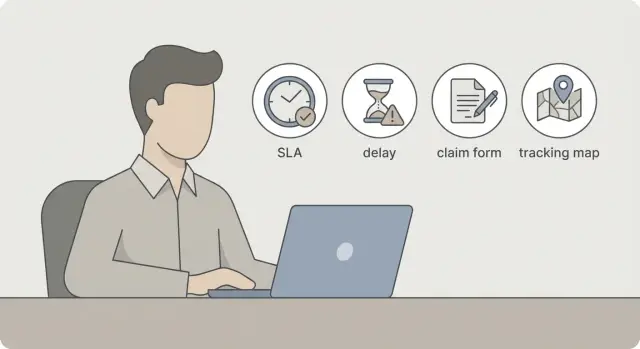
Why SLA and exceptions are hard to sell by email
Selling freight service by email isn’t like selling “we have trucks.” Capacity is easy to picture: a lane, a rate, a pickup time. Reliability is harder because the buyer is really buying fewer bad days. Your message has to earn trust quickly, without sounding like a promise you can’t keep.
Prospects hesitate for three reasons: risk (their customer gets angry), cost (expedites, chargebacks, detention), and surprises (a small issue turns into a fire drill). If your email feels vague, they assume the worst: hidden fees, unclear rules, and a claim process that drags on.
In outbound, “exceptions” is just a polite word for the moments that break the plan. Most of the time, it means delays (missed pickup, missed delivery window, late linehaul), damage (pallet tipped, wet cartons, crushed cases), loss (short shipment, missing piece, theft), holds (customs, appointment problems, paperwork errors), or no-coverage events like weather closures and strikes.
The trap is trying to sell reliability with soft, absolute language. Phrases like “on-time delivery guaranteed” or “zero claims” can backfire. If a prospect reads that as a hard promise, a single exception turns into a dispute later: what counted as on-time, when the clock started, who approved the appointment, and what proof is needed for a claim.
A simple example: a shipper has retail deliveries with a 2-hour receiving window. They don’t just care that you can move the load. They care what happens when the driver is running 45 minutes late, who alerts the store, whether you can reschedule, and how you document it. If your email doesn’t address that reality, it feels like marketing, not operations.
Define your core promises before you write a single line
Most outbound fails for one simple reason: the message asks for trust, but the offer is fuzzy. Before you write a subject line, get clear on what you can promise every day and where the edge cases start.
Start with your SLA in plain language, not marketing terms. “98% on-time” means nothing unless you say what “on-time” is, which clock you use, and what happens at the cutoff. If you can’t define it in one sentence, you can’t sell it in an email.
Write your core promises as a short internal note you can reuse in briefs and sequences. Keep it tight:
- On-time definition: delivery window, appointment rules, cutoff times (for example, tender by 3pm local for next-day linehaul).
- Service levels: which lanes or modes qualify (standard vs expedited) and what changes the price.
- Exceptions: what you cover (carrier miss, missed appointment) vs what you don’t (weather, shipper load delay).
- Claims: timeline to file, proof needed (POD, photos, invoice), payout rules (cap, depreciation, exclusions).
- Visibility: what you send (milestones, ETA changes), and how often it updates.
Concrete example: if you serve regional LTL, decide whether “on-time” means “within the delivery appointment window” or “by end of day.” Those two choices change how you talk about delays. If a consignee gives a 9-11am window and the truck arrives at 11:20, do you treat that as late, or “within same-day”? Your email has to match your operations.
This is the foundation of strong outreach: clear promises, clear boundaries, and clear proof. If you run outbound at scale, store these definitions as snippets so every rep uses the same wording.
A simple outbound message structure that works in logistics
Most prospects don’t buy “service.” They buy fewer late loads, fewer angry emails, and fewer escalation calls. Start with the operational outcome they want, then support it with one measurable claim.
A practical structure looks like this:
- Lead with the outcome: reduce missed delivery windows, cut detention, lower exception tickets.
- Add one specific metric: on-time %, average delay minutes, claim rate per 1,000 shipments, time-to-first-update.
- Explain exception handling: what happens when a pickup slips, a POD is missing, or a temperature alert fires.
- Offer proof in plain terms: a short lane example or a recent exception story and the steps taken.
- Close with a low-friction next step: confirm fit, share top lanes, run a small pilot.
Here’s a mini-example you can borrow.
Open with: “If missed delivery windows are causing chargebacks, we focus on preventing the last 10% of problems.” Then anchor a claim: “On our managed LTL lanes, we target 96%+ on-time delivery and send an exception update within 30 minutes of a confirmed delay.”
Next, show you don’t ignore the messy part: “If a consignee rejects, we confirm the reason, document photos, and propose two recovery options (re-deliver vs return) in the same thread. If a claim is likely, we collect BOL, POD, and damage notes upfront so it doesn’t drag on.”
Close with a simple ask: “If you share 3-5 recent problem loads (lane + mode + what went wrong), I’ll reply with where we can improve visibility and what we’d measure in a two-week pilot.”
Messaging around SLAs without overpromising
SLA language fails in outbound when it sounds like a blanket guarantee. Aim for clear definitions and clear updates, not bold claims.
Start by defining “on-time” in a way a shipper can measure. For example: “On-time means delivery within the appointment window, or within 30 minutes of the scheduled time for FCFS.” If you cover both pickup and delivery, say so. If you only commit to delivery, say so. Avoid floating numbers like “98% on-time” unless you also say what counts as on-time and what lanes it applies to.
Next, say what you report during transit. Shippers don’t need a paragraph. They need predictable checkpoints. A simple promise could be: “We send updates at pickup, first hub scan, out-for-delivery, and proof of delivery, plus an ETA refresh if the ETA moves by 60+ minutes.” That tells them what they’ll see and when.
When exceptions happen, name the root cause without sounding defensive. Use neutral, observable facts: “We saw a missed scan at the regional hub, so we treated it as a delay risk and re-checked the linehaul plan.” Avoid blaming the consignee, the weather, or “the system” unless you have proof.
One sentence on what happens when things go wrong keeps you credible: “If we miss a committed window, you get an exception note with the reason code, the recovery ETA, and the claims or credit steps in the same thread.”
Example: “For your Chicago to Dallas weekly loads, we can commit to delivery within the appointment window. If the ETA shifts by more than an hour, we message you with the new ETA, the milestone that changed, and the recovery plan.”
How to talk about delays so you sound prepared
Delays are normal in freight. What makes shippers nervous is silence, vague updates, or a surprise charge. A calm delay note should sound like a plan, not an excuse.
Start by naming the kind of delay your buyer already expects. Keep it specific but not dramatic: weather and road closures, port congestion, a missed pickup appointment, a dock that can’t receive early, a customs hold, or an equipment shortage.
Then move quickly to “what we do next.” One sentence on the cause is enough. The rest should be actions and choices.
Here are a few actions you can mention (only if you truly do them):
- Notify shipper and consignee within 30 minutes of confirmation.
- Rebook the appointment or request a new delivery window.
- Reroute or swap to an alternate carrier if the ETA risk is high.
- Escalate to ops leadership when a cutoff or penalty is at risk.
- Share the updated ETA and the reason code in plain terms.
Your update cadence is where you sound prepared. Be clear about who sends updates and when. For example: “Ops will send an update at 10am and 3pm local time until the load is back on track, and you can reply to this thread for a live check anytime.” A predictable rhythm beats constant pings.
Finally, ask for the minimum info you need so the delay doesn’t bounce around.
A line you can reuse: “To rebook quickly, we need the PO number, appointment contact name, dock hours, and whether split delivery is allowed.”
A short scenario: “Your inbound to Dallas missed the 8-10am window due to a facility linehaul delay. We’ve requested a same-day rebook and placed a backup carrier on standby. Next update at 2pm CT with confirmed slot or alternate plan.”
Claims messaging that builds trust instead of fear
Claims are sensitive. If your outbound email sounds like a warning label, prospects assume problems are common. Instead, position claims as a clear, documented process you run when something goes wrong. That tone signals maturity and control.
Keep the claim path simple and predictable. One short paragraph plus a few steps is usually enough:
- Report: where to report issues and what to include in the first message.
- Evidence: exactly what proof is needed, in plain language.
- Review: how you assess carrier, warehouse, and consignee notes.
- Resolution: what the final output looks like (decision, payout, credit, or next action).
Then remove guesswork on documentation. People don’t fear “evidence” if it sounds normal and easy to gather. Typical items to name are photos of the damage, proof of delivery (POD) or delivery receipt, the commercial invoice, and a packing list.
Timelines matter more than promises. Avoid “fast” and use checkpoints you can stand behind: acknowledge receipt within one business day, send status updates on a set cadence (for example, every 3 to 5 business days), and give an estimated decision window once the file is complete.
Edge cases are where trust is won. Name them briefly so the prospect knows you’ve seen them before: concealed damage discovered after delivery, denied delivery where freight returns to origin, and partial loss where only some cartons are missing.
Example wording: “If there’s damage or loss, we acknowledge the claim within 1 business day, confirm what evidence is needed (photos + POD + invoice + packing list), and send updates every few days until a decision is made. For concealed damage, we’ll ask for photos and notes as soon as it’s discovered so the file stays valid.”
Visibility and tracking: make it concrete
“Visibility” is vague until you define what a buyer actually gets. Say what the channel is (a portal, proactive emails, EDI/API, or simple milestone messages) and how often you update. If you only offer “tracking available on request,” most shippers hear “I’ll be chasing you.”
A clear promise names the exact moments you report on, not the tech you use. Buyers care less about your system and more about whether they can plan labor, docks, and customer promises.
Milestone updates that usually matter include pickup confirmed (with time and location), in-transit status when something changes, arrival at terminal or destination city, out for delivery (with an ETA window), and delivered (with POD details if available).
Make it feel real with a quick example: “If a load misses the pickup window by 30+ minutes, we message you with the new ETA and the reason (driver delay, dock wait, weather), and we confirm the next action we’re taking.”
Be honest about blind spots. If some carriers don’t provide live GPS, say so. If international handoffs create gaps between scan events, say what you can still commit to: “You’ll get every milestone scan we receive, and we’ll flag any gap over X hours so you don’t have to ask.”
Close the loop by tying visibility to a business outcome: “Most clients see fewer check-in emails because updates arrive before they have to chase, and escalations happen earlier when they still can be fixed.”
Step-by-step: write a 4-email sequence for logistics outbound
Start narrow. Pick one lane or one customer type (for example: food shippers doing weekly LTL, or importers moving containers from one port to a single DC). When you aim at everyone, your proof sounds vague.
Next, choose 2-3 proof points you can back up. Good options are on-time performance for that lane, your update cadence during transit, and what happens when there’s an exception (who owns it, how fast you respond, what the shipper sees).
Write three short angle variants before you build the sequence. Keep the body similar, but change the opener so you can learn what resonates:
- SLA-first: lead with on-time and appointment discipline.
- Exceptions-first: lead with how you handle delays, claims, and missed windows.
- Visibility-first: lead with proactive updates and easy tracking.
Then build a simple 4-email sequence. Each email should add one concrete detail, not more words.
- Email 1 (Day 1): One sentence on who you help + one lane-specific promise. Example: “For Chicago to Dallas FTL, we confirm pickup, send a mid-transit update, and flag risks early.”
- Email 2 (Day 3): One sentence on exceptions. Example: “If a load looks like it will miss a window, we alert you before it’s late and propose options (reset appointment, transload, or reroute).”
- Email 3 (Day 7): One sentence on claims and responsibility. Example: “For OS&D, we log photos and paperwork the same day and tell you what we need to move fast.”
- Email 4 (Day 12): A light bump with a clear next step: “Worth comparing notes on your top 1-2 problem lanes?”
Finally, add one qualification question that makes replies easy. Pick just one: “How many loads a week on that lane?” or “Is your bigger pain missed appointments or lack of updates?”
This works because it stays specific: one lane, real proof, one simple question.
Common traps in SLA and exceptions outreach
The fastest way to lose a shipper is to sound like you’re hiding the hard parts. SLAs and exceptions are exactly where buyers expect surprises, so your outreach needs to be clear early, even if the details are simple.
One common trap is burying key terms until a call. If the first email says, “We can improve service,” but only later mentions cutoff times, claim handling, or what happens when a carrier misses a pickup window, it feels like a bait-and-switch. Put the basics upfront: what you commit to, what you measure, and what happens when something goes wrong.
Another trap is making absolute promises. “100% on-time” and “zero claims” sound good, but buyers know they aren’t real. A better approach is to say how you manage variance: “We target X% on-time to appointment, and if a load risks missing a window, you get an alert with options (hold, rebook, swap mode).”
Jargon also creates friction when it isn’t defined. If you say OTIF, POD, or accessorials without plain-language meaning, the reader has to work to understand you and they usually won’t. Use everyday wording the first time: “on-time, in-full,” “proof of delivery,” “extra charges like detention or liftgate.”
Visibility is another easy place to overclaim. “Real-time tracking” is vague unless you say what the buyer will actually see. Specify the output, not the buzzword: milestone updates, ETA changes, geofence events at pickup and delivery, and who gets notified.
Finally, many emails skip the buyer’s role in preventing exceptions. Shippers know bad data creates bad outcomes, but they want to hear you say it clearly. Keep it simple: what you need from them (accurate addresses, appointment rules, contact names, commodity and access limits), what you do with it (validate upfront, confirm appointments, flag high-risk loads), and what happens if info is missing (pause booking, or book with stated assumptions).
If you’re running outbound at scale, bake these points into your sequence so you don’t rely on a rep remembering them. If you use a sequencing platform like LeadTrain, keeping consistent snippets across multi-step emails gets easier, and reply classification (interested, not interested, out-of-office, bounce, unsubscribe) helps the team follow up cleanly.
Example: outbound email for a shipper dealing with missed windows
A good outbound note for missed delivery windows should sound like you understand the daily mess: parcel + LTL shipments, retailer appointment times, and a support inbox full of “where is it” tickets.
Email example
Subject: Fewer missed windows (parcel + LTL) without adding a new dashboard

Hi Maya -

Not sure if you own delivery performance at BrightCart, but I noticed you ship both parcel and LTL into time-windowed locations.

SLA: We commit to a confirmed ETA and proactive updates before the delivery window is at risk (not after it is missed).

Visibility: Your team gets one status view across parcel + LTL with scan-based milestones and exception flags you can route to support.

Exceptions: When a shipment is trending late, we send the reason, the next best action (reschedule, expedite, or rebook), and the customer-facing wording your agents can copy.

If missed windows are driving extra "where is it" tickets, would a small pilot on one lane or one warehouse help you measure impact in 2 weeks?

- Jordan
This keeps the promise tight, makes visibility specific (milestones, exception flags), and shows you have a plan for when things go wrong.
If they reply like this
Prospect reply:
We already have tracking. The issue is carriers miss appointments and we only find out when the customer complains.
Your response (calm, not defensive):
That makes sense - most tracking tells you where it is, not whether it will hit the window.

What we do differently is flag risk early (missed pickup, no scan, terminal dwell, appointment not confirmed) and push an update to your team before the window is blown.

If you’re open to it, let’s run a low-risk pilot: 25 shipments from one origin, one set of appointment rules, and a simple scorecard (missed windows, WISMO tickets, and time-to-first-update). If it doesn’t move those numbers, we stop.
The point is to show you can predict exceptions, not just report them.
Quick checklist and next steps
When your offer is SLAs and exception handling, clarity beats cleverness. Use this checklist so your first email reads like a plan, not a pitch.
First email checklist (promise, proof, process, next step)
Before you hit send, make sure your first email includes:
- Promise: one specific outcome you aim to protect (on-time windows, fewer claims, faster exception recovery).
- Proof: a concrete signal (exception response time, how you handle OS&D, which visibility milestones you share).
- Process: what happens when something goes wrong (who gets notified, when, and what options you offer).
- Next step: a small ask (reply with one lane, one pain point, or whether missed appointments are a weekly issue).
Keep it grounded. For example: “If a pickup is running late, we confirm a new ETA within 30 minutes and send a short update with options (reschedule, split shipment, alternate carrier).”
Follow-up checklist (new info, simple question, stop condition)
Follow-ups work when they add something, not when they repeat the same claim.
- Add new info: one example of an exception you handle well (missed window, detention risk, damage claim) and the exact action you take.
- Ask one simple question: “Is delays or claims the bigger headache on your top lanes?”
- Include a stop condition: “If this isn’t relevant, tell me and I’ll close the loop.”
Quick deliverability checks: keep subject lines plain, keep the email short, avoid shouty punctuation, and avoid spammy terms like “guaranteed” or “act now.” Aim for a calm, professional tone.
If you’re building sequences and testing openers, LeadTrain (leadtrain.app) can be a useful fit because it combines multi-step sequences, warm-up, and reply classification in one place, so your team spends less time sorting replies and more time on the conversations that matter.
FAQ
Why is it so hard to sell an SLA by email in freight?
Start by selling the operational outcome, not “service.” Say what you protect (missed windows, chargebacks, escalation emails), then back it with one measurable claim and a clear definition of what counts as on-time.
Should I include an on-time percentage in my cold email?
Use numbers only when you can define them in one sentence. Pair the metric with scope and a definition, like which lanes or modes it applies to and what “on-time” means (appointment window vs end-of-day).
What’s the simplest way to explain exception handling in one email?
State what triggers an exception update and how fast you respond after it’s confirmed. A simple promise like “exception update within 30 minutes of confirmation” feels more credible than a vague “we communicate well.”
How do I talk about reliability without overpromising?
Avoid absolute guarantees like “100% on-time” or “zero claims.” Instead, describe how you manage variance: what you monitor, when you alert, and what recovery options you offer when a load risks missing the window.
What should “on-time” mean in an SLA email?
Define on-time in terms the shipper measures: appointment window rules, FCFS tolerance, and when the clock starts. If you cover pickup and delivery differently, say so plainly so there’s no later dispute.
What visibility details actually matter to shippers?
Use a predictable set of milestones, not buzzwords. Promise updates at pickup, key in-transit change points, out-for-delivery, and POD, plus an ETA refresh when the ETA moves beyond a clear threshold.
How should I write about delays so I don’t sound defensive?
Lead with actions, not excuses. Name the delay type briefly, then give the recovery plan, the new ETA, and the next update time so the reader feels you’re in control and not just reporting bad news.
How do I mention claims without scaring prospects?
Make the process feel normal and organized: acknowledge quickly, list the exact documents needed, and set a status update cadence. Keep it short so it sounds like readiness, not a warning label.
What’s a good 4-email outbound sequence structure for logistics?
Build a 4-email sequence where each step adds one new concrete detail: promise, exception handling, claims process, then a light bump. Keep every email narrow to one lane or one customer type so your proof doesn’t sound generic.
What’s the best low-friction next step to ask for in the first email?
Offer a small, time-boxed pilot with a simple scorecard, like missed windows, time-to-first-update, and exception ticket volume. Ask for 3–5 recent problem loads so you can respond with specific measurement and fit, not a generic pitch.