Ethical event follow-up email sequence: a 3-email plan
Ethical event follow-up email sequence: a 3-email plan that references sessions and booths respectfully, avoids spammy list-blast vibes, and earns replies.
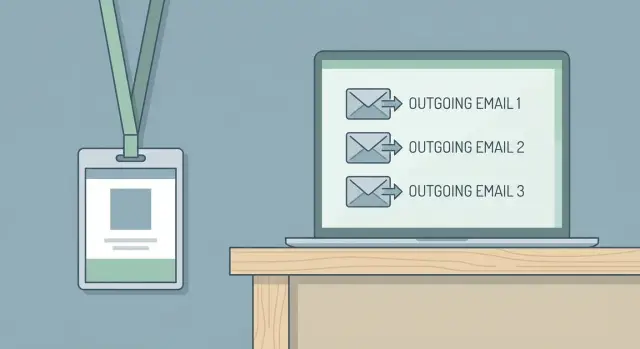
Why post-event follow-ups can feel spammy
Post-event emails often land badly for one simple reason: the recipient doesn't remember giving you a reason to email them. Even if you collected leads the right way, a message that shows up days later with a vague subject line and a generic pitch can feel like you pulled their address from an attendee list.
Most people read a bland post-conference email and assume one of two things. Either you scraped a list, or you blasted the same template to everyone and hoped a few people would bite. That assumption gets stronger when the email says, "Great meeting you at the event," but you never actually spoke.
A real conversation has details. An attendee-list blast has placeholders.
Here’s the difference people feel right away:
- Real conversation: you reference a specific moment (a question they asked, a problem they mentioned, the demo they watched) and you keep the follow-up short.
- Attendee-list blast: you name-drop the event, add a big company-style pitch, and push for a meeting without context.
The "creepy" part usually isn't the follow-up itself. It's the mismatch between what they remember and what your email implies. If your message suggests a relationship that doesn't exist, people feel tricked. If it's honest and modest, it feels normal.
The goal is simple: be specific, be truthful about how you know them, and make it easy to say no. Use language like "I saw you at X session" (if true) instead of "we met." Offer something small and relevant, and end with a low-pressure choice so they can opt out without friction.
A simple ethical line: what you can and cannot say
The ethical line is straightforward: email people only when you have a reasonable, honest connection to them, and you can explain that connection in one calm sentence. If your message would surprise them, it will feel like spam.
It’s usually fair to follow up when you actually spoke, exchanged cards, scanned a badge with clear notice, or they opted in to hear from you. It can also be fair when someone requested a demo, downloaded your event resource, or responded to a question you posted for attendees.
It’s usually not fair when the only reason you have their email is "we bought or scraped an attendee list" or "a partner sent us a spreadsheet" and the person never interacted with you. Even if it’s technically allowed, it often breaks trust and hurts deliverability.
Honest ways to say where you got their info without sounding defensive:
- "We met at [Event] on Tuesday near the expo hall."
- "You signed up for our session notes at [Event]."
- "Your colleague [Name] suggested I reach out after our chat at [Event]."
- "You requested the checklist at our booth."
Keep claims strictly true. Don’t imply they visited your booth, attended your talk, or "stopped by" if you aren’t sure.
If you’re not certain what they did, reference the event and the topic, not their behavior: "I was at [Event] too and took notes from the pricing panel."
Respect privacy when you personalize. Don’t mention sensitive details from badge scans or lists (job-change hints, phone numbers, side conversations, or anything that feels like tracking). The goal is recognition, not proof that you can see their data.
The 3-email structure (high level)
A good follow-up sequence is short, specific, and easy to ignore if the person isn’t interested. Think of it as three small touches that earn attention, not three attempts to corner someone into a meeting.
Email 1 is the respectful first touch. Lead with real context (how you connected), then share one relevant takeaway that proves you paid attention. Keep the ask small: a simple yes/no, a 10-minute chat, or permission to send one resource.
Email 2 should feel like a helpful add-on, not a nudge. Bring something useful that matches their role (a short checklist for SDRs, a two-sentence benchmark for marketers, a quick idea for founders). Make it easy to answer, like choosing between two outcomes or replying with a number.
Email 3 closes the loop. Keep it polite and low pressure, with a clean opt-out. If they’re not the right person, invite a simple redirect.
A sending rhythm that avoids piling on:
- Email 1: within 1-2 days after the event
- Email 2: 3-4 days later
- Email 3: 5-7 days later
Keep each email focused on one next step. For example: after a brief booth chat, Email 1 asks if they want a two-minute summary of the session notes you mentioned. Email 2 shares the summary plus one practical tip for their role. Email 3 checks whether to close the thread and confirms you won’t follow up again if they don’t reply.
Email 1: the respectful first touch
Email 1 sets the tone. Remind them why you’re reaching out, show you aren’t blasting an attendee list, and give them an easy way to respond.
Subject lines should feel specific without pretending you had a deep conversation. Safe patterns:
- Quick question about [session topic]
- Following up on [booth theme] (one idea)
- [Event name] - 10 min on [problem]?
- Sharing a resource on [topic]
- Did this takeaway resonate?
Your opening line should reference what you learned, not what they did. That keeps it honest even if you didn’t meet.
If you reference a session, mention a concrete takeaway and why it relates to their role. Example: "I caught the session on pipeline quality and liked the point about tightening definitions before adding volume."
If you reference a booth theme, keep it general. Example: "I stopped by a few booths focused on onboarding, and it reminded me how often handoffs break after the first week."
If you only have a shared theme, name it plainly: "A lot of conversations at the event circled around deliverability and getting replies without burning domains."
Then make a small ask with a clear menu:
- Reply with A or B (A: want the resource, B: not relevant)
- "Open to a 10-minute chat next week?"
- "Want me to send a one-page checklist?"
Avoid excessive flattery ("loved your brilliant insights"), vague compliments ("your company is amazing"), and pressure language ("last chance," "I need 15 minutes tomorrow"). Keep it calm, specific, and easy to decline.
Email 2: add something useful, keep the ask small
If Email 1 was your polite introduction, Email 2 earns attention. Send something the person can use in under five minutes, with no meeting required. This is where the sequence starts to feel like networking, not noise.
Tailor by role, but keep the language light. Don’t pretend you know their priorities. A simple line like, "If you own X, this might help" is usually enough.
Examples that work well:
- Sales leader: a short call opener, objection replies, or a one-page follow-up playbook
- Founder: a quick "what I’d do first" checklist focused on outcomes and time
- Ops: a process checklist (handoff, routing, data hygiene) or a simple SOP
- Marketing: a subject-line test idea, a nurture outline, or a small experiment plan
Keep the "useful thing" concrete. Low-effort options:
- A six-bullet checklist from a session topic you both care about
- A short script (voicemail or follow-up reply) they can copy
- A 90-second summary of a talk plus one practical takeaway
- A mini template (email, form question, qualification prompt)
Mention your product only as context, not as the point. One sentence is plenty: "If it helps, we do this with [your tool], but the checklist works either way." If you use LeadTrain, you can also keep replies organized with automatic categories like interested, not interested, or out-of-office, so follow-ups stay respectful.
Close with a soft permission question: "Should I keep sending ideas like this, or is it better to stop?"
Aim for 80-140 words. Here’s a simple pattern you can copy:
Subject: Quick idea for {topic}

Hi {Name} - sharing one practical thing: {useful item in 1 sentence}.

If you’re responsible for {role area}, it can help with {specific outcome}. If it’s not relevant, no worries.

Want me to send 1-2 more ideas like this, or should I stop here?

- {Your name}
Email 3: close the loop without pressure
Email 3 is your polite exit. It protects your reputation (and theirs) by showing you respect their time and inbox. Done well, it also keeps the door open without forcing a reply.
Keep the tone neutral and calm. Avoid any "last chance" framing, countdowns, or guilt. People get busy after events, and your job is to make ignoring you feel safe.
A simple structure that works:
- One sentence reminder of context (no exaggeration about meeting).
- One sentence value or resource (optional, but specific).
- A small, neutral next step.
- A clear opt-out line.
Here’s copy you can adapt:
"Hi Maya, quick note to close the loop after the conference. If improving outbound reply rates is on your plate this quarter, I can share a 2-page checklist we use to spot deliverability issues fast. If it’s not a priority, no worries at all. Want me to send it, or is there someone else who owns this internally?
If you’d rather not hear from me, reply ‘no’ and I’ll stop."
That opt-out needs to be simple and drama-free. No surveys, no explanations, no "please confirm." Just a clean stop.
Offer a neutral alternative to booking a call. "Want me to send the checklist?" or "Should I reach out in a few months?" is easier than asking for 20 minutes. Another safe option is "Who’s the right person for this?" so they can redirect you without committing.
When to stop: if there’s no reply after Email 3, stop emailing that person about the event. Mark them as "no response" and only contact again if you have a genuinely new reason that would matter to them (not just a new pitch). This is how you avoid the attendee-list spam vibe and keep your deliverability healthy.
Referencing sessions and booths the right way
A good reference should explain why you picked this person, without pretending you know them. The goal is relevance, not fake closeness. That’s what keeps your follow-up from feeling like you bought a list.
Sessions: reference the idea, not the attendee
If you mention a session, anchor it to something public: a point the speaker made, a slide topic, or a takeaway the event promoted. Avoid anything that implies you tracked the person or know they attended.
Better: "I liked Jane Lee’s point about reducing no-show rates by confirming outcomes in the invite. Curious if that is a priority for your team this quarter."
Not great: "Saw you in Jane Lee’s talk and noticed you taking notes."
If you actually spoke after the session, you can be specific, but only with details you truly discussed. One clean line is enough: "You mentioned your team is testing shorter demos and watching drop-off after minute five."
Booths: talk about the theme, not their visit
Booth references should be about the booth topic or demo theme, not about them stopping by, unless they did and you remember it clearly.
If you only saw them in passing, be honest and keep it general: "I was in the analytics booth area and it sparked an idea about how teams handle handoffs between marketing and sales." That reads normal. "I saw you at Booth 214" reads like surveillance.
Safe phrasing when you didn’t have a real chat:
- "Your team works on X, and the session/booth on Y made me think of this."
- "One takeaway I wrote down was Z. Does that match what you are seeing?"
- "If this is not relevant, happy to close the loop."
- "If you did not attend, no worries - the idea still applies."
Never invent familiarity to sound personal. A plain, accurate note beats a "personalized" line that feels untrue.
Common mistakes that trigger the attendee-list spam vibe
Most people don’t mind a polite follow-up after a conference. What they react to is the feeling that they were treated like a row in a spreadsheet.
The fastest way to create that feeling is speed and volume. If you send three messages in two days (especially the morning after the event), it reads like automation, not a real connection. Give it some space, and make each email earn its place.
Another trust killer is list hygiene. Using a purchased, scraped, or "someone sent me the attendee list" database may be legal in some cases, but it often feels creepy. Even if you do have a legitimate source, say how you met or why you’re reaching out in plain language.
Over-personalization can backfire, too. Mentioning a session is fine. Mentioning the exact moment they walked past Booth 214, their LinkedIn activity, and their tech stack in one email can sound like surveillance. Keep personalization to what’s normal for a human to notice.
Mistakes that show up again and again:
- Too many emails too fast (no breathing room, no new value)
- "Let’s connect" with no reason, no time box, and no clear next step
- Pretending you had a conversation you didn’t have
- Ignoring "not interested," "unsubscribe," or silence and pushing harder
- Making the first email a pitch instead of a helpful, relevant note
If you’re running follow-ups at scale, treat replies as instructions. When someone says no, stop. Tools like LeadTrain help here by classifying replies (interested, not interested, unsubscribe) so you don’t accidentally follow up with people who clearly opted out.
Quick checklist before you hit send
A good event follow-up starts before you write a single line. If you can’t explain how you got someone’s contact info in one honest sentence, pause and fix that first.
A fast pre-send check you can run in two minutes:
- Source check: confirm where the email came from (your badge scan, their business card, a direct chat, a public form). If it’s an attendee list, don’t pretend you met.
- Permission and claims: mention only what you truly saw or heard. "I enjoyed your session on X" is fine if you were there. Otherwise say something like "I was at [Event] too and took notes from the X panel."
- One-line context + one value: include one clear context line, then one relevant point tied to the event (a takeaway, a resource, or a specific problem you heard people discuss).
- Small CTA: ask for one small next step (a 10 minute call, a quick reply, or permission to send details). Avoid "book a demo" as the first move.
- Stop rules: decide what you’ll do if they unsubscribe, say no, or don’t reply, and stick to it.
Deliverability matters too. Keep formatting simple so your message looks like a real 1:1 note. Use a plain-text friendly layout (short lines, no heavy design, no big images), and keep the subject direct.
Watch for language that can spike spam filters or feel pushy:
- Replace hypey words like "guaranteed" or "limited time" with specific facts.
- Remove urgency tricks like "Act now" or "Last chance."
- Keep links to a minimum, and don’t use link shorteners.
- Send from a real person name, and make replies easy.
After you send, track replies, update your notes, and stop follow-ups immediately when someone opts out. If you’re using a platform like LeadTrain, set up reply classification and unsubscribe handling so "no" stays "no."
Example: a realistic 3-email follow-up after a conference
You attended a session on pipeline reporting, and you briefly chatted with Priya in the coffee line afterward. You didn’t scan her badge or buy an attendee list. You only know what she told you: she leads SDR ops at a mid-size company and is reviewing follow-up workflows.
What you can reference: the session title, a specific takeaway you both heard, and the fact you spoke for a minute. What you can’t: "I saw you at Booth 14," "I got your contact from the attendee list," or guesses like "you must be shopping for a new CRM."
Here’s a realistic sequence you can send.
Email 1 (same or next day)
Subject: Quick follow-up from [Event]

Hi Priya - we chatted in the coffee line after the pipeline reporting session.

One point that stuck with me was “weekly hygiene beats monthly heroics.” You mentioned you’re tightening how reps follow up without annoying people.

If it helps, I can share a simple 3-touch follow-up outline we’ve used.

Worth a 10-minute call next week, or should I just send the outline here?
- [Your name]
Email 2 (2-3 business days later)
Subject: That follow-up outline (short)

Hi Priya - promised outline below.

1) Day 0: refer to the talk + one question
2) Day 2: share a useful asset (template/checklist)
3) Day 6: polite close-the-loop

If you tell me what you sell (ticket size + who replies), I’ll tailor subject lines and the “small ask.”
Open to that, or not a priority right now?
- [Your name]
Email 3 (about a week later)
Subject: Should I close this out?

Hi Priya - quick one.

If improving follow-ups is on your list this quarter, I’m happy to share a few examples from similar SDR ops teams.

If not, no worries. Reply “later” and I’ll check back in a month, or “no” and I’ll stop.
- [Your name]
If you get replies, handle them simply.
Interested: propose two times and restate the specific topic (follow-up workflow).
Not interested: thank them and stop emailing.
Out-of-office: wait until their return date, then resend Email 1 with a one-line recap.
Deciding whether to keep nurturing: only continue if they asked for it (for example, "check back next month") or if you have a genuinely relevant update. Otherwise, stop. That’s how you avoid the attendee-list spam vibe and keep post-event outreach emails respectful.
Next steps: run ethical follow-ups at scale without chaos
If your follow-up is ethical, scaling it shouldn’t change the feel. Set the sequence and timing once, then keep each message human by personalizing only the first line (for example, the specific talk you attended or the question someone asked at your booth). Everything else can stay consistent.
Before you send a post-event push, protect deliverability. New domains and mailboxes need a warm-up period so your first real campaign doesn’t look like sudden mass outreach. If you bought a fresh domain for the event, give it time to build a good reputation, then ramp volume gradually.
A simple setup that stays respectful
A clean system helps you do the right thing by default. Bake a few rules into your process:
- Use one short personalized opener, then get to a clear, honest reason for writing.
- Stop immediately on unsubscribe requests and remove bounces from future sends.
- Route positive replies fast, so interested people get a quick, normal response.
- Keep your list to people you actually met or had a clear reason to contact.
Test the wording, not the ethics
Small A/B tests are fine, but keep them to low-risk parts like subject lines or a single call to action (CTA). Don’t test different levels of "how much you imply you know" about someone. If a line would feel creepy if said out loud, it doesn’t belong in a test.
If you want fewer moving parts, LeadTrain (leadtrain.app) keeps domains, mailboxes, warm-up, multi-step sequences, and reply classification in one place. That can make it easier to run the same three-email plan after each event and automatically label replies (interested, not interested, out-of-office, bounce, unsubscribe) so your team follows up quickly and respectfully.
The simplest way to avoid chaos is to decide your rules once, then automate the boring parts so you can spend your time on real conversations.
FAQ
Why do post-event follow-up emails so often feel spammy?
They feel spammy when the email implies a relationship the recipient doesn’t remember. If your message sounds like you met or talked, but you didn’t, people assume you scraped a list or blasted a template.
Fix it by stating the real connection in one plain sentence and keeping the first ask small and easy to decline.
What should I say if I didn’t actually meet the person at the event?
Don’t write “great meeting you” or pretend they visited your booth. Say something true and modest like you attended the same event and a specific session takeaway made you think of their role.
Keep it focused on the idea, not on their behavior, unless you’re certain you actually spoke.
What’s the ethical line for emailing someone after an event?
Use a simple rule: only email when you can explain how you got their contact and why you’re reaching out in one calm sentence. If that sentence would surprise them, don’t send.
If your only source is a bought, scraped, or forwarded attendee list with no interaction, it’s usually a bad idea even if it’s technically allowed.
When should I send the first, second, and third follow-up emails?
Send the first email within 1–2 days while the event is still fresh. Follow with a second email 3–4 days later only if you can add something useful, then a final close-the-loop email about 5–7 days after the first.
Avoid stacking messages too close together; fast volume is one of the quickest ways to look automated.
What subject lines work without sounding fake or salesy?
Choose subjects that sound specific but not overly familiar. Refer to a session topic, a takeaway, or a resource you’re sharing, and keep it short.
Avoid vague hype or pressure wording; clarity beats cleverness for event follow-ups.
How do I personalize without creeping people out?
Mention one concrete takeaway or theme from the event and connect it to a likely problem for their role. Keep it to one line of context and one line of value.
Skip “proof” personalization like exact booth numbers, tracking-style details, or anything that reads like surveillance.
What’s the best call to action for Email 1?
Make the first ask tiny: permission to send one resource, a simple yes/no, or a quick 10-minute chat. Give them an easy way to say “not relevant” without explaining.
If the first email is a full pitch with a big meeting request, it often triggers the “attendee list blast” feeling.
What should Email 2 include so it feels helpful instead of pushy?
Email 2 should be useful even if they never book a call. Share something they can apply quickly, like a short checklist, a template, or a brief summary of a session idea with one practical step.
Mention your product only as light context, not as the point of the email.
How do I write Email 3 to close the loop without pressure?
Email 3 is a polite exit that protects your reputation. Restate the honest context in one sentence, offer one specific optional resource, and ask whether to close the thread.
Include a simple opt-out line like “Reply ‘no’ and I’ll stop,” and then actually stop if they say no or never reply.
How can I scale event follow-ups while staying respectful and organized?
Handle replies as instructions and keep it consistent. Interested replies should get a fast, normal response with a clear next step; “not interested” and unsubscribes should stop immediately; out-of-office should be paused until they return.
Tools like LeadTrain help by keeping domains, mailboxes, warm-up, sequences, and reply classification in one place, so your team doesn’t accidentally follow up with people who opted out or bounced.