Breakup email: protect your brand and still earn referrals
Learn how to write a breakup email that protects your brand, reduces complaints, and keeps the door open for referrals or introductions.
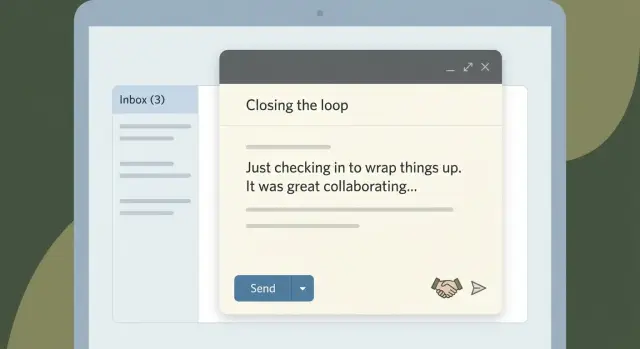
What a breakup email is (and why it matters)
A breakup email is a short, polite note you send after a reasonable amount of follow-up when the other person hasn’t replied. It closes the loop without guilt, pressure, or a last-minute pitch. Think: “No worries if now isn’t the time. I’ll stop reaching out unless you tell me otherwise.”
What it’s not: a passive-aggressive message, a “final warning,” or a trick to force a reply. If your tone sounds like you’re keeping score, it can do more harm than good.
Silence usually has boring causes. People get busy, priorities change, timing is wrong, your email gets buried, or you reached the wrong person. Sometimes it’s simply not a fit.
Without a clean close, a few things tend to happen:
- You keep poking, and they hit “spam” just to make it stop.
- Your brand picks up a bad feeling that’s hard to undo.
- The relationship sits in awkward limbo (no clear “no,” no clear next step).
- Your team wastes time chasing leads that aren’t going anywhere.
A good breakup email improves the outcome even when you don’t “win” the deal. Success looks like a calm, respectful close that protects your reputation and keeps the door open.
The best replies are simple:
- “Not a priority right now, circle back in X months.”
- “Not me, talk to Sarah on our team.”
- “We already solved this, but thanks.”
When to send a breakup email (and when not to)
Timing matters because the point is to end the loop politely, not to add one more push.
Send a breakup email after your follow-ups have stopped adding new value. If your last one or two messages were already clear, helpful, and specific, the next email should be the closeout.
A practical timing guide that fits most teams:
- Cold outreach: after 4 to 6 total touches over 10 to 18 days.
- Warm inbound interest (they downloaded, requested info, or replied once): after 2 to 4 touches over 5 to 10 days.
- If they asked you to follow up later: don’t send a breakup note. Set a date and follow it.
Send the breakup email when continuing will annoy, not help: no replies after multiple attempts, clear mismatch, or the thread feels stuck. Treat open rates as noise. What matters is whether you’re getting a conversation.
Don’t send a breakup email when there’s active motion. If they’re out-of-office, asked a question, or you owe them a detail, close that loop first.
Also skip it if you have a genuinely relevant update (not just another pitch), you realize they never should’ve been on the list, or the thread already has compliance risk (they sounded irritated or asked you to stop).
If you find yourself needing 10 follow-ups to get a response, something else is off: targeting, offer, or message clarity.
Tone rules that protect your brand
A breakup email isn’t the place to “win” an argument or squeeze out a reply. The goal is to exit cleanly, leave a good impression, and reduce the chance someone marks you as spam.
Write like a real person. Use plain words. Be specific about what you’re closing (for example: “I’ll stop reaching out about a demo for X”).
Remove pressure completely. Skip guilt, countdowns, and “last chance” language. Even when you mean well, those phrases often read as manipulation.
Assume good intent. A simple line like “It might not be the right time” protects the relationship and gives the reader an easy way to respond without feeling blamed.
A few tone habits that usually work:
- Keep the subject line neutral.
- Make one clear point: you’re closing the loop.
- Give permission to ignore it: “No need to reply if not relevant.”
- Avoid loaded words like “urgent,” “final,” or “you didn’t respond.”
Make it easy to reply in one tap. Offer one or two options (yes/no or A/B). “Should I close this out?” feels lighter than “Why haven’t you responded?”
When the tone stays calm and respectful, even a “no” can end with “try Jane” or “circle back later.”
How to write it (step by step)
A good breakup email is short, clear, and easy to answer. It should sound like a clean close, not a second pitch.
A simple 5-part structure
Think in five small pieces:
- Subject line: a close-out note, not a new pitch.
- One-sentence context: remind them what you reached out about.
- Easy out + stop promise: give them a graceful “no” and state you’ll pause outreach.
- Low-effort reply option: offer a quick choice (timing, not a fit, or a redirect).
- Polite close + real signature: name, role, company.
Keep each piece to one or two lines. If it starts to feel like a pitch, cut it.
Subject line and body that feel natural
Subject lines that work tend to be boring (that’s good):
- "Closing the loop"
- "Should I stop reaching out?"
- "Last note from me"
Then use simple sentences. Here’s a fill-in example you can adapt:
"Hi Maya - I emailed a couple times about helping your team book more qualified demos from outbound. If now isn’t a priority, no problem - I’ll close my loop and stop reaching out.
If it helps, just reply with (a) ‘later’ and a month, (b) ‘not a fit’, or (c) the right person to talk to. Thanks for your time,
Alex Chen, SDR at ExampleCo"
One extra tip: send this from the same thread as your earlier follow-ups so it reads like a conclusion, not a new campaign.
Message patterns you can reuse (without sounding templated)
The fastest way to write breakup emails is to keep a few patterns on hand, then customize one detail so it feels personal (a role, a trigger, or the exact topic you’re closing). Don’t customize everything. One good detail is usually enough.
Option A: “Close the loop” (general outreach)
Subject: Should I close this out?

Hi {{FirstName}} - I haven’t heard back, so I’m going to assume this isn’t a priority.

If it’s a “no,” just reply “no” and I’ll close the loop.

If it’s a “not now,” tell me when to check back and I’ll follow that.

Thanks,
{{YourName}}
Option B: “Not the right time” (ask permission for a future check-in)
Subject: Park this for now?

Hi {{FirstName}} - totally fine if the timing is off.

Would it be okay if I check back in {{Month/Quarter}}? If not, I’ll stop here.

Thanks,
{{YourName}}
Option C: “Right person?” (redirect request without pressure)
Subject: Quick redirect?

Hi {{FirstName}} - are you the right person for {{OneLineTopic}}?

If not, who should I speak with? If you’re not sure, no worries - I’ll close this out.

Thanks,
{{YourName}}
Option D: “I’ll stop here” (sensitive industries or strict inboxes)
Subject: I’ll stop emailing

Hi {{FirstName}} - I don’t want to fill your inbox.

I’ll stop emailing after this. If you’d like me to reach out later, reply with a month that works.

Thank you,
{{YourName}}
How to still earn referrals or introductions
A breakup email can do more than close the loop. Done right, it leaves the other person feeling respected, which is the only real path to referrals and introductions.
If you add value, keep it to one line. No attachments, no long pitch, no “thought you’d like this deck.” A quick idea is enough, like: “If it helps, here are 3 subject lines that tend to work for {industry} when targeting {role}.”
Only ask for a referral if you’ve earned the right to ask. That usually means you were relevant, polite, and you didn’t pester them.
Before you ask, make sure:
- You can name a clear use case (not “we help everyone”).
- Your message is short and low-pressure.
- The ask is optional, with an easy “no.”
When you do ask, make it specific. “Who should I talk to?” is broad and feels like work. Ask for the exact person type, and give an easy out.
Example lines that stay light:
- “If this isn’t on your plate, is there someone who owns outbound for {team}?”
- “If you know one person at a {company type} who’s trying to book more demos this quarter, I’d appreciate an intro. Totally optional.”
- “If it’s a no, just reply ‘no’ and I’ll close this.”
Keep the referral ask separate from your sign-off, and make it the last optional sentence. It reads like a polite request, not the reason you wrote.
Small details that reduce complaints
Most spam complaints don’t come from one big mistake. They come from small annoyances that make someone think, “I didn’t ask for this,” then hit the spam button.
Start with a simple opt-out line. Put it at the end, after your sign-off, and keep it human. A long “compliance paragraph” can look shady, but no opt-out at all can feel pushy.
A simple option that works well in a breakup email: “If you’d rather not hear from me again, reply with ‘no’ and I’ll close the loop.”
Be strict about honesty. Avoid lines that imply actions you didn’t take, or inflated promises you can’t support. People report messages when they feel tricked, not just when they’re busy.
Also avoid “salesy tracking” language. Saying “I saw you opened my email 3 times” can feel creepy, even if it’s true.
Keep the email light: fewer links, fewer attachments, fewer “click here” asks. For a closing message, one clear next step is enough, and often the best next step is simply replying.
A few hygiene checks that prevent avoidable damage:
- Use a real reply-to address, and make sure replies are monitored.
- Keep the subject line plain and accurate.
- Don’t contact someone again if they unsubscribed or replied with a clear “no.”
- If they asked you to remove them, confirm once, then stop.
- Double-check any company name, job title, or personal detail you mention.
Common mistakes that backfire
A breakup email is meant to end the thread with respect. The biggest mistakes happen when the note feels like punishment for not replying.
One common slip is letting irritation show. Even a hint of sarcasm (“guess you’re too busy”) can read as hostile. If you’re frustrated, save it as a draft, wait an hour, then rewrite with neutral language.
Another mistake is using the breakup email as a last pitch. Adding new features, a long explanation, or multiple questions stops being a close and becomes another sales email. The reader feels tricked.
Patterns that often backfire:
- “I’ll assume you’re not interested” phrased like a threat
- Fake urgency (“closing this out today” when nothing is changing)
- A menu of asks in one email (call, referral, feedback, timing, new contact)
- Sending it to several people at the same company at once
- Aiming at the wrong role (asking a busy exec for details a manager would know)
Quick checklist before you hit send
Read it once out loud. If it sounds like you’re trying to win an argument, it’s too sharp. If it sounds like you’re begging, it’s too heavy.
A quick final check:
- Keep it tight: aim for 120 to 150 words.
- One ask only (or none).
- Remove pressure lines and replace them with neutral language.
- If you include value, keep it optional and specific.
- Include a clear stop line and a simple signature.
A simple final test: if someone forwarded your note to a teammate, would it read as respectful and professional? If yes, it’s ready.
Example scenario and next steps
Maya is an SDR reaching out to a VP of Operations. She sent four follow-ups over two weeks. No replies. She doesn’t want a fifth nudge that feels needy or pushy. She wants to protect the brand, reduce spam complaints, and still leave the door open.
Here is the breakup email she sends as the final touch:
Subject: Should I close the loop?

Hi Jordan,

I don’t want to keep filling your inbox.

If this isn’t a priority, just reply “no” and I’ll close the loop.
If timing is the issue, reply “later” and I’ll reach out next quarter.
If someone else owns this, who’s the right person to talk to?

Thanks either way,
Maya
What comes back is often one of three simple replies:
- "No, not something we’re working on." (clear no)
- "Later - check back in April." (timing)
- "Talk to Priya, she handles this." (intro)
Once you get a reply, tag it right away so your team doesn’t keep following up by accident. A simple tagging scheme is enough: Interested, Not interested, Out-of-office, Unsubscribe, Bounce.
If you want to make this repeatable, add a breakup email as the final step in your sequence and make sure your system truly stops on replies and opt-outs. For teams running cold outreach at scale, LeadTrain (leadtrain.app) is built to keep the setup and sending workflow in one place, including multi-step sequences and reply classification that helps you spot “not interested,” “out-of-office,” and “unsubscribe” quickly.
After a few weeks, review results by segment: which titles respond with “later,” which industries introduce someone, and which subject lines get the cleanest closes. Then tighten your sequence so your last email always ends as a polite, low-pressure closing message. "}
FAQ
What is a breakup email, and when should I send one?
Send it after your follow-ups stop adding new value and you’re not getting a conversation. A common default is 4–6 total touches over about 10–18 days for cold outreach, and 2–4 touches over 5–10 days for warmer inbound interest.
What’s the goal of a breakup email?
A good breakup email closes the loop politely and protects your sender reputation. The best-case outcome is a simple reply like “not now,” “not a fit,” or “talk to Sarah,” so you can stop chasing and move on cleanly.
When should I not send a breakup email?
Skip it when there’s active motion: they’re out-of-office, asked a question, or you owe them details. Also don’t use it if they already asked you to stop; confirm once if needed, then stop completely.
How do I make sure the tone doesn’t sound passive-aggressive?
Keep it calm, human, and specific about what you’re closing. Avoid guilt, sarcasm, countdowns, “final warning” language, and anything that sounds like you’re blaming them for not replying.
What subject lines work best for breakup emails?
Use a neutral, boring subject that signals closure rather than a new pitch. Simple options include “Closing the loop,” “Should I stop reaching out?,” or “Last note from me.”
What should I include in the body of a breakup email?
Keep it short: one sentence of context, a clear “I’ll stop reaching out” line, and a low-effort reply option. If it starts to feel like a pitch, remove details until it reads like a clean close.
How do I make it easy for them to reply?
Offer one or two easy choices that take seconds to answer, like “later” with a month, “no,” or “please talk to X.” Make it clear they can ignore the email if it’s not relevant.
Can I ask for a referral or introduction in a breakup email?
Ask only after you’ve been relevant and respectful, and keep it optional. Make the ask specific (who owns outbound, who handles this topic) and give an easy out so it doesn’t feel like extra work.
How do I reduce spam complaints with a breakup email?
Add a simple opt-out line, avoid creepy tracking comments, and keep links and attachments to a minimum. Make sure replies are monitored and that your system stops outreach on “no,” unsubscribe, or removal requests.
How can LeadTrain help with breakup emails and follow-up hygiene?
Use the breakup email as the final step in your sequence and ensure it truly stops on replies and opt-outs. Tools like LeadTrain can help by managing sequences and automatically classifying replies (interested, not interested, out-of-office, bounce, unsubscribe) so your team doesn’t follow up by accident.